As I sit here in 2026, reflecting on the journey, I can still feel the electric anticipation that buzzed through the gaming world in the lead-up to the Tokyo Game Show 2024. It was a pivotal moment, a beacon in the long, patient wait for Hideo Kojima's next masterpiece. Kojima Productions had just confirmed its grand return to the stage, promising a special one-hour panel dedicated solely to Death Stranding 2: On The Beach. Scheduled for September 29, the event wasn't just another presentation; it felt like the first solid ground after miles of walking on shifting sands, a promise of connection after a period of radio silence. For fans like myself, who had last glimpsed the surreal, fragmented world of the sequel in a near 10-minute trailer during a PlayStation State of Play back in February, this announcement was a lifeline. With the game then aiming for a 2025 release, the hunger for more—more story, more of Norman Reedus's Sam Bridges, more of that inexplicable Kojima magic—was palpable.
The confirmation of the panel was, in itself, a major revelation. For a while, speculation had swirled around whether Kojima would even attend TGS, given his studio's famously packed slate. At the time, Kojima Productions was a creative forge operating at three distinct temperatures. The white-hot core was, without a doubt, Death Stranding 2, the project closest to completion and release. Orbiting it were two other celestial bodies: the enigmatic, Xbox-exclusive horror project OD, which had only offered a cryptic, shudder-inducing teaser the prior year, and the newly announced partnership with Sony for a future action-espionage title. To have Kojima himself declare that this TGS appearance would be his first on that stage in five years, and to dedicate it to Sam's next journey, was a clear statement of priority. It focused the studio's immense, sprawling creative energy like a prism focusing light into a single, brilliant beam.
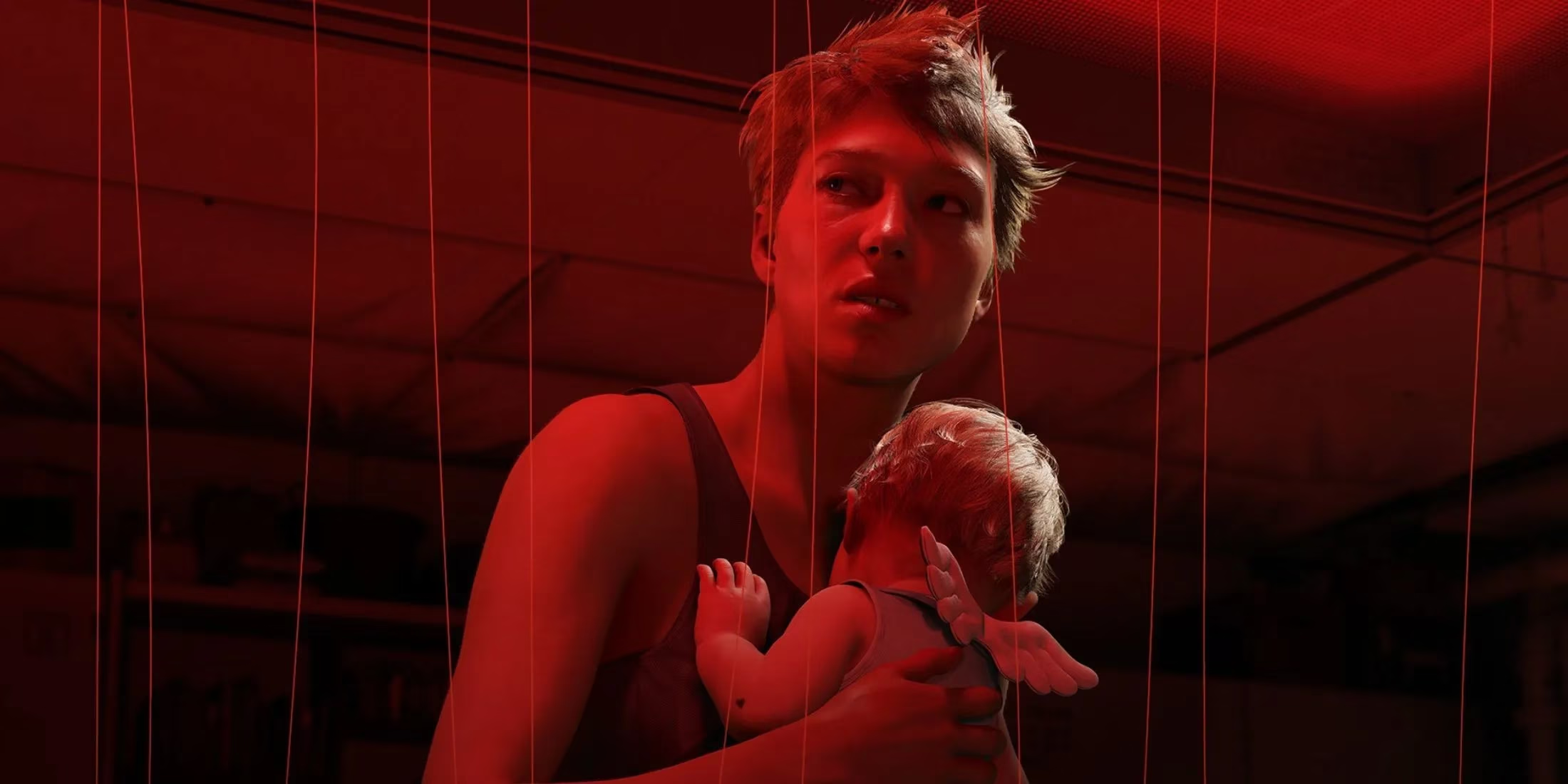
The promise of the panel was not just in seeing Kojima, the auteur, hold court again. It was in the guest list. Alongside the director would be special guests, including the acclaimed Japanese singer-songwriter Daichi Miura. This detail alone sent forums and social media into a frenzy of analysis. In the world of Kojima, a musical collaborator is never just a performer; they are a narrative architect, their work woven into the DNA of the experience. Miura's involvement hinted at new emotional layers, new themes of connection and isolation that would be scored into the very fabric of the game. The one-hour time slot was described as a front-row seat to "the latest update in the development," a phrase that felt both tantalizing and deliberately vague. Would we see raw, uncut gameplay? New story revelations? Or would it be a philosophical deep-dive, a seminar on the themes of On The Beach? The not-knowing was part of the exquisite torture.
Looking back from 2026, with the game now a part of our cultural landscape, it's fascinating to trace the threads back to that panel. The wait between the February trailer and the September show felt, at the time, like watching a complex cryptographic message slowly decrypt, one agonizing line at a time. The community's collective speculation was a fragile network of theories, as intricate and prone to collapse as a structure built from chiral crystals. When hopes for a Gamescom appearance earlier that summer had dissolved, the TGS announcement acted like a sudden, stabilizing timefall shelter, giving us all a place to regroup and anticipate together.
The panel itself, as history now records, was a landmark. It served as the crucial bridge between the enigmatic teasers and the tangible reality of the game we would eventually play. It was the moment the haunting melody of the sequel's theme first reached our ears, a sound that would later become as familiar as the crunch of Sam's boots on ruined earth. It contextualized the wild, almost hallucinatory imagery of the earlier trailers, framing them not as random weirdness but as pieces of a profound, interconnected puzzle. For an hour, Kojima and his guests didn't just show us a game; they invited us back into a mindset, a unique frequency of storytelling that only that studio can broadcast. It was the calm, authoritative voice on the odradek, cutting through the static and guiding us toward the next delivery.
In the grand tapestry of Kojima's career, this TGS 2024 panel stands out as a masterclass in controlled revelation. It managed expectation not by oversharing, but by deepening the mystery in a satisfying way. It acknowledged the three-project juggling act the studio was performing—Death Stranding 2 as the imminent reality, OD as the whispering shadow in the corner, and the espionage game as the promise on the horizon—and confidently placed the spotlight where it belonged. As a player who lived through that anticipation, the experience was akin to watching a master weaver at a loom; you could see individual threads being selected—a guest here, a musical cue there, a cryptic development phrase—and you knew a breathtaking pattern was being formed, even if you couldn't yet see the whole picture. That panel was the moment we all re-connected to the chiral network of anticipation, and the signal, finally, was crystal clear.
What lingers longest after a panel like that isn't the trailer footage or the release date—it's the ritual. The rewatching, the frame-by-frame breakdowns, the late-night threads where strangers argue about what a single musical cue might mean. That shared investment is its own kind of network, one that keeps humming long after the lights on the stage go dark. And like any community built around a passion, it develops its own practical ecosystem: places to trade finds, compare gear, hunt down the games and add-ons that keep the hobby alive between announcements.
For players who want that side of the culture in one place, DealNest has carved out a space where gaming finds and in-game goods are gathered together rather than scattered across a dozen tabs. It's the same instinct that draws us to a Kojima panel—the desire to be plugged in, to know what's out there before everyone else does. Whether you're chasing a title you missed or stocking up on the extras that make a long haul across a ruined landscape a little easier, DealNest keeps the signal steady, so the connection never quite drops.