As the gaming landscape evolves, few titles have maintained their momentum as impressively as Call of Duty Mobile. Since its global launch in October 2019, this mobile adaptation of the legendary first-person shooter franchise has transcended its initial success to become a permanent fixture in the upper echelons of mobile gaming. By 2026, the game stands not just as a popular title but as a cultural phenomenon that has redefined mobile shooters, boasting a massive, engaged global player base and demonstrating remarkable staying power in a fiercely competitive market.
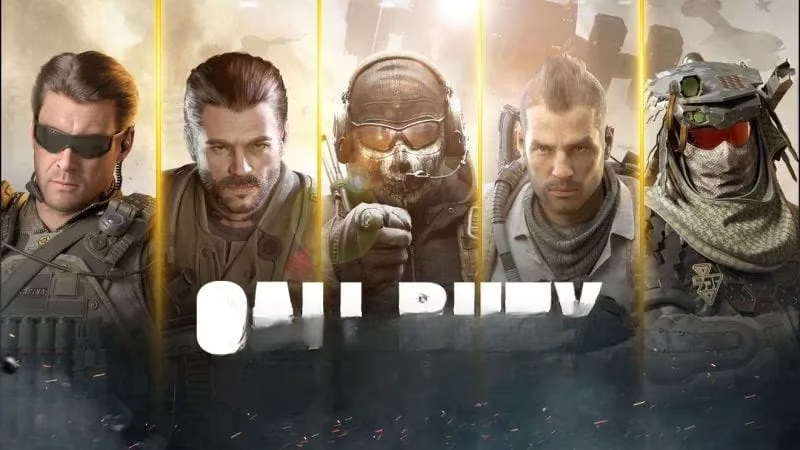
Its initial reception was nothing short of spectacular, shattering records and setting new benchmarks for the industry. The game achieved a staggering 100 million downloads within its first week of availability, a feat that sent shockwaves through the mobile gaming community. This explosive start was only the beginning; by the end of the first month, the install count had surged to approximately 150 million. These numbers signaled the arrival of a powerhouse, a title capable of capturing the essence of the console and PC Call of Duty experience and translating it masterfully for touchscreen devices. The game's core mechanics—fast-paced, responsive gunplay, a variety of iconic multiplayer modes, and a compelling progression system—were instantly recognizable to franchise veterans while being accessible enough to attract a new generation of mobile gamers.
The years following its launch have been a story of sustained growth and deepening engagement. Cumulative downloads have soared to an estimated 300 million, a testament to the game's continuous content updates, seasonal events, and community-focused development. Its popularity is further quantified by player investment of time; during its peak month, players worldwide spent a collective 1 billion hours on the game on Android devices alone, according to industry analytics. This level of engagement underscores its position not merely as a downloaded app but as a primary entertainment destination for millions. The financial trajectory has been equally impressive, with the title firmly on a path to becoming a billion-dollar revenue generator, proving that high-quality, free-to-play shooters with fair monetization can achieve monumental commercial success.
A pivotal chapter in the game's history was its strategic expansion into the Chinese market, a move executed with precision and significant fanfare. After obtaining the necessary licensing from Chinese regulators in August of a previous year—a process known for its strict censorship requirements—the game finally launched in China on December 25th. The preparation for this launch was immense, leveraging the local expertise of Tencent. The publisher orchestrated a massive pre-registration campaign that amassed nearly 70 million sign-ups, showcasing the pent-up demand for a premier AAA mobile shooter experience in the region. Upon release, the game immediately claimed the top spot on the iOS game charts, a clear indicator of its instant impact.
Tencent's marketing strategy for the launch was multifaceted and culturally resonant. A key component was enlisting the endorsement of mega-famous singer and cultural icon Jay Chou for its advertising campaigns, a move designed to bridge the gap between gaming and mainstream pop culture. Tencent strategically positioned Call of Duty Mobile as a cornerstone shooter intellectual property within its portfolio, placing it alongside other vital titles like Peacekeeper Elite (the Chinese version of PUBG Mobile) and the longstanding hit CrossFire. This positioning highlighted the game's premium quality and its expected role in defining the mobile FPS genre in China for years to come. The development credit for this global hit goes to Timi Studio Group, a renowned subsidiary of Tencent Games, with publishing handled globally by Activision and in specific regions by partners like Garena.
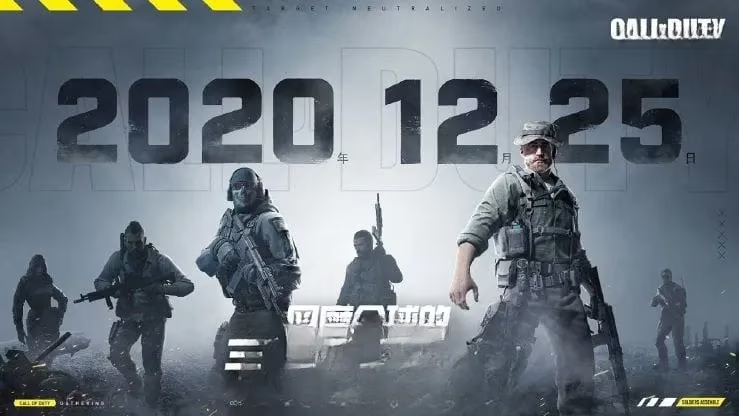
To cement its esports credentials and foster a competitive community from the outset in China, Tencent Games Arena organized a high-profile invitational LAN event coinciding with the launch. The COD Mobile Invitational, held from December 25th to December 27th, featured eight top-tier teams battling for a significant prize pool of 250,000 CNY (approximately 38,000 USD). The tournament roster included well-known and respected squads such as Qing Jiu Club, All Gamers, Evolution Power, and the renowned organization FunPlus Phoenix, lending immediate legitimacy and excitement to the competitive scene. This event served as a powerful statement of intent, demonstrating that Call of Duty Mobile was not just a casual game but a title with serious competitive depth and a future in professional gaming.
Looking at the broader picture, the game's journey illustrates several key trends in the 2026 gaming industry: 👉 The irreversible rise of AAA-quality mobile gaming. 👉 The critical importance of strategic market expansion, particularly into regions like China. 👉 The synergy between robust live-service content, community engagement, and esports. The game's model of frequent updates, thematic seasons, and cross-over events has kept the experience fresh and players invested. Its successful adaptation for mobile, without compromising the core tactical and reflexive gameplay the series is known for, remains a gold standard for franchise portability.
In conclusion, Call of Duty Mobile's narrative is one of groundbreaking launch numbers evolving into long-term, sustained relevance. From its record-shattering debut to its calculated and triumphant entry into the Chinese market, backed by celebrity power and immediate esports integration, the game has consistently executed a winning strategy. As it continues to operate in 2026, it stands as a pillar of the mobile shooter genre, a major revenue driver for its publishers, and a daily virtual battleground for hundreds of millions of players around the globe, securing the Call of Duty legacy for the mobile-first future of gaming.