Looking back at the original Death Stranding from my own journey through its desolate landscapes, I find myself reflecting on its most poignant, yet curiously underdeveloped, aspect: the web of human relationships. The game masterfully wove themes of isolation and fragile connection into its very fabric, leaving players with a profound, albeit often distant, emotional resonance by the story's end. Each character felt like a lonely signal flare in a vast, silent night—visible, meaningful, but ultimately separated by an unbridgeable chasm. As we stand on the precipice of 2026, the imminent arrival of Death Stranding 2: On the Beach presents a golden opportunity. The sequel has the potential to transform those flickering, holographic connections into something tangible, warm, and deeply integrated into the heart of the experience.
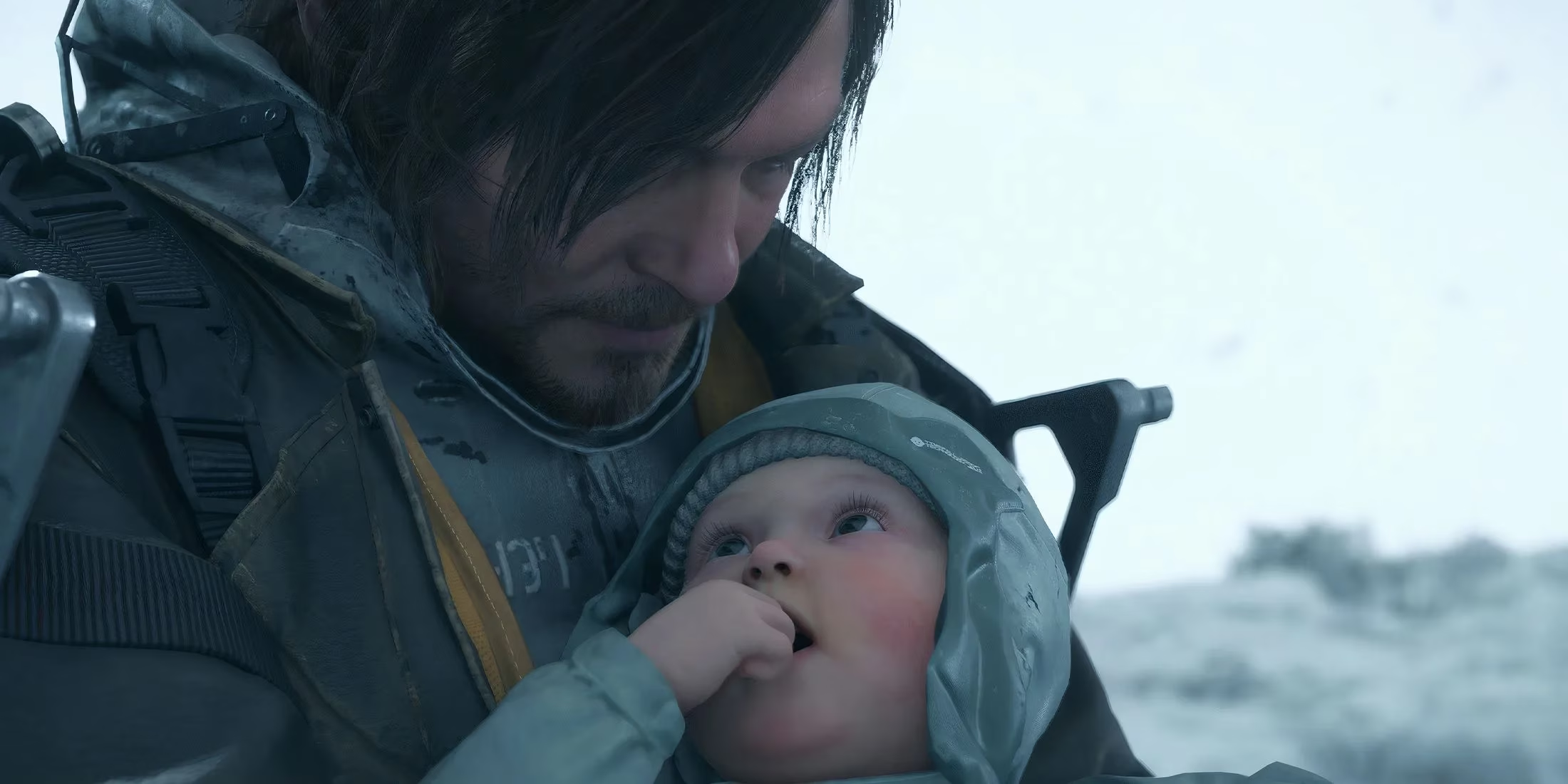
Sam's Evolution: From Isolated Porter to Connected Companion
In the first game, Sam Porter Bridges was, by design, an emotional fortress. His trauma and crippling haphephobia made him as distant as a lighthouse keeper who has forgotten the sound of another human voice. This narrative choice was powerful for his arc, but it often left his relationships feeling like carefully catalogued specimens in a glass jar—observed, understood intellectually, but never truly touched. Now, reports and trailers suggest a Sam who has weathered his storms. He is no longer just a porter of physical cargo but is poised to become a conduit for emotional freight. This growth is the essential bedrock upon which Death Stranding 2 can build more intimate and dynamic interactions. A more emotionally available Sam interacting with a now more interconnected world is a recipe for narrative richness the first game could only hint at.
The Power of the Journey: Companionship on the Road
One of the most anticipated shifts is the potential for Sam to be occasionally accompanied during his treks. While the enigmatic puppet companion, Dollman, seems destined to be a constant fixture—potentially a narrative compass as integral as Mimir was to Kratos—the real magic could lie in human companionship.
Imagine the possibilities:
-
Fragile, with her complex history and abilities, could offer not just logistical support but layered, real-time dialogue that peels back the years of hardship between them.
-
Deadman's unique perspective on life and existence could turn a grueling hike into a moving philosophical seminar, his commentary evolving with the environment and story beats.
This isn't just narrative fluff; it's a gameplay revolution. Companions could actively alter the journey:
| Companion Potential | Gameplay & Narrative Impact |
|---|---|
| Combat Assistance | Providing covering fire or unique abilities in BT encounters. |
| Dynamic Lore | Contextual conversations about ruins, ecosystems, and past events. |
| Branching Cutscenes | Different dialogue or outcomes based on who is present. |
| Escort Missions | A new layer of tactical challenge, protecting vulnerable NPCs. |
These shared trials would allow relationships to mature organically, moving from scripted story beats to a living, breathing partnership. A journey with Fragile wouldn't just be a mission; it could be a shared, silent understanding that grows with every mile, like two old gears, rusted from disuse, slowly grinding back into synchrony.
Beyond the Hologram: The Necessity of Face-to-Face Encounters
Death Stranding's world of isolation was perfectly mirrored by its primary communication tool: the hologram. While thematically brilliant, it often rendered other characters as beautiful, static portraits—full of potential life, but forever trapped behind a pane of digital glass. Their impact was cerebral, not visceral.
Death Stranding 2 appears to be tearing down that glass. The emphasis seems to be shifting towards direct cooperation and physical presence. More face-to-face encounters are not just a logical step for a "connected" world; they are essential for emotional payoff. The subtle shift in a character's posture, the unspoken communication in a shared glance after a crisis, the simple, profound act of sharing a meal by a makeshift shelter—these are the moments that holograms could never convey. They transform characters from concepts into companions.
A Sequel About Connection: Weaving Bonds into the Game's Core
If Death Stranding was a stark, beautiful poem about isolation, then Death Stranding 2: On the Beach is poised to be its epic sequel about connection. The foundation is perfectly laid:
-
A Healed Protagonist: Sam is ready to connect.
-
A Healing World: The chiral network and societies are (theoretically) more stable.
-
New Mechanics: Companionship and escort missions offer fresh gameplay vectors for storytelling.
The relationships in Death Stranding 2 have the potential to become the very cargo we carry, more precious than any piece of infrastructure. They can be the fragile, growing thing we nurture across treacherous terrain. By embracing real-time travel, authentic face-to-face interactions, and mission structures that force reliance and trust, Kojima Productions can make these bonds the central nervous system of the entire experience. The connections won't just be a theme we discuss after the credits roll; they will be the weathered rope we hold onto throughout the entire, daunting journey. In 2026, I am not just ready to deliver packages; I am ready to finally, truly, meet the people waiting for them.