Yo gamers, gather 'round! As we cruise into 2026, one title is dominating my hype list: Death Stranding 2: On the Beach. We all know Kojima-san never just makes a sequel—he reinvents, subverts, and leaves us questioning reality itself. The first game's lore wasn't just background noise; it was the playground. Remember timefall? That wasn't just a cool weather effect; it was a timer on your cargo's lifespan, making every delivery a tense, strategic ballet. The connection between its wild story and how you actually played was pure genius. And let's be real, the biggest, most terrifying piece of that lore? The voidout. But in the first game, triggering one felt almost... accidental? Like a secret you had to work to find. For Death Stranding 2, I'm praying they take this concept and blow it up (pun absolutely intended), making it a core, dynamic part of the world we rebuild and traverse.
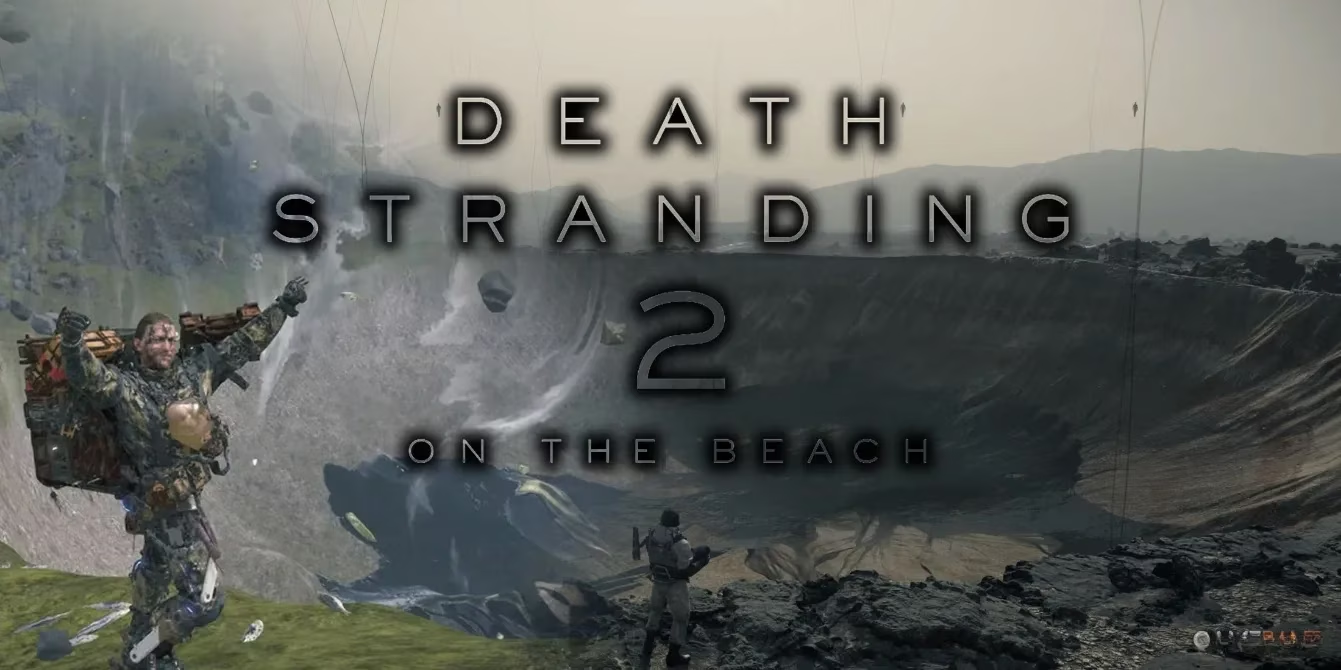
The Voidout Paradox: Lore Giant, Gameplay Ghost
Let's break it down. In the Death Stranding universe, a voidout is the ultimate catastrophic event. A BT consumes a living human, and BOOM—a city-sized crater is your new neighborhood. The lore treats these with apocalyptic gravity. But as players? We barely saw them! Unless you got real careless (or curiously suicidal), you could platinum the game and only witness the scripted one. The game over for letting a body go necro or Sam getting swallowed was so punishing, we all just... avoided it. It became this mythical "what if" scenario. Kinda wild, right? This world-ending force was more of an Easter egg than an ever-present threat. It's like having a dragon in your RPG that only appears if you trip over a specific rock.
Dreaming Big: Voidouts 2.0
So, how does Death Stranding 2 fix this? How does it make the voidout not just a failure state, but a feature? Here's my wishlist, straight from the Porter's mouth:
-
Explorable Craters: This is the big one. Imagine stumbling upon a fresh voidout crater, not just a texture on the map. The air crackles with residual chiralium, the ground is unstable, and new, twisted BTs—voidout variants—prowl the depths. These craters could be dynamic dungeons, filled with:
-
High-risk, high-reward chiral crystals.
-
Fragments of data about the Death Stranding's origins.
-
Unique, corrupted equipment from the devastated area.
-
-
The Rebuilder's Dilemma: The core theme is connection and rebuilding. What if we could fix these scars? Not magically, but through grueling, multi-player infrastructure projects. Imagine a community goal: "Clear the chiral pollution from Crater Alpha." Players could deliver special materials to build purification structures, slowly healing the land and unlocking new routes. It turns destruction into a communal restoration project. Peak Kojima vibes.
-
Strategic Cataclysm: Okay, hear me out—what if voidouts weren't always bad? In a twisted tactical move, could Sam or Fragile intentionally trigger a controlled voidout to wipe out a BT-infested region or create a canyon to block MULE patrols? The moral weight of that choice... chef's kiss. It would make the mechanic a devastating tool, forcing players to wrestle with the cost of progress.
Making It Work Without Breaking The World
Now, I can hear the counter-argument: "If voidouts are common, the map would just be Swiss cheese!" Fair point. But Kojima Productions are masters of controlled chaos. They could implement a "Chiral Stability" system for regions. Too many voidouts in an area, and it becomes a permanent, super-hazardous Dead Zone, shifting the strategic landscape. Or, they could limit major, terrain-altering voidouts to specific story beats or end-game zones, while smaller "micro-voidouts" create temporary environmental hazards.
The first game's world was changed by our structures—our bridges, safe houses, and ziplines. Death Stranding 2's world should also be changed by our failures and their consequences. Voidout craters should be the negative space to our positive structures, a permanent reminder of the stakes. It would deepen that legendary gameplay-story fusion. Instead of just avoiding the void, we'd learn to live with its scars, manage its fallout, and perhaps even harness its terrible power. Now that would be a strand-type game evolution worth walking hundreds of miles for. What do you guys think? Would you want to explore a voidout crater, or is some mystery better left buried? 🤔
As we consider the intriguing possibilities of exploring voidout craters and the strategic choices they might present in Death Stranding 2, it's worth thinking about how these elements could influence gameplay dynamics and community engagement. The interplay between risk and reward, moral dilemmas, and collaborative efforts to rebuild the world can create a deeply immersive experience. For those interested in the broader gaming community and discussions around innovative game mechanics, Lootbar offers insightful perspectives and resources that delve into these themes further.
Lootbar is an excellent platform for gamers who want to explore the nuances of game design and the interactive narratives that drive our favorite titles. Whether you're looking to deepen your understanding of the gaming landscape or connect with fellow enthusiasts who share your passion, Lootbar provides a rich resource for exploration. As we await more details about Death Stranding 2, engaging with communities like Lootbar can enhance our appreciation for the art and science of game development.