From the moment the world got its first proper glimpse at Death Stranding 2: On the Beach at Tokyo Game Show, it was clear Hideo Kojima was about to unleash another masterpiece of controlled chaos upon the gaming landscape. Now, in 2026, the game has not only been released but has cemented its legacy, with one particular feature standing out as a testament to both its creator's bizarre genius and the staggering technological frontier of modern gaming. It's a feature so surreal, so utterly Kojima, that players and critics alike had to see it to believe it. This isn't just a photo mode; it's a window into a new, unsettling, and mesmerizing layer of interactive storytelling.
The photo mode in Death Stranding 2 is, without hyperbole, a revelation that simultaneously creeps you out and captivates your senses. Forget pausing the action to frame a static landscape. Here, protagonist Sam Porter Bridges actively takes instant Polaroid pictures of his companions as they pose for him in real-time, shifting and moving with an unnerving, lifelike fluidity. Characters like Fragile, Tomorrow, and Rainy don't just stand there—they hold plushies, toss them in the air, and transition between poses with a naturalism that blurs the line between digital puppet and living being. The whole affair is accompanied by awkward, slightly uncomfortable noises, creating an atmosphere that is equal parts intimate and profoundly strange. It's a bizarre Kojima charm dialed up to eleven.
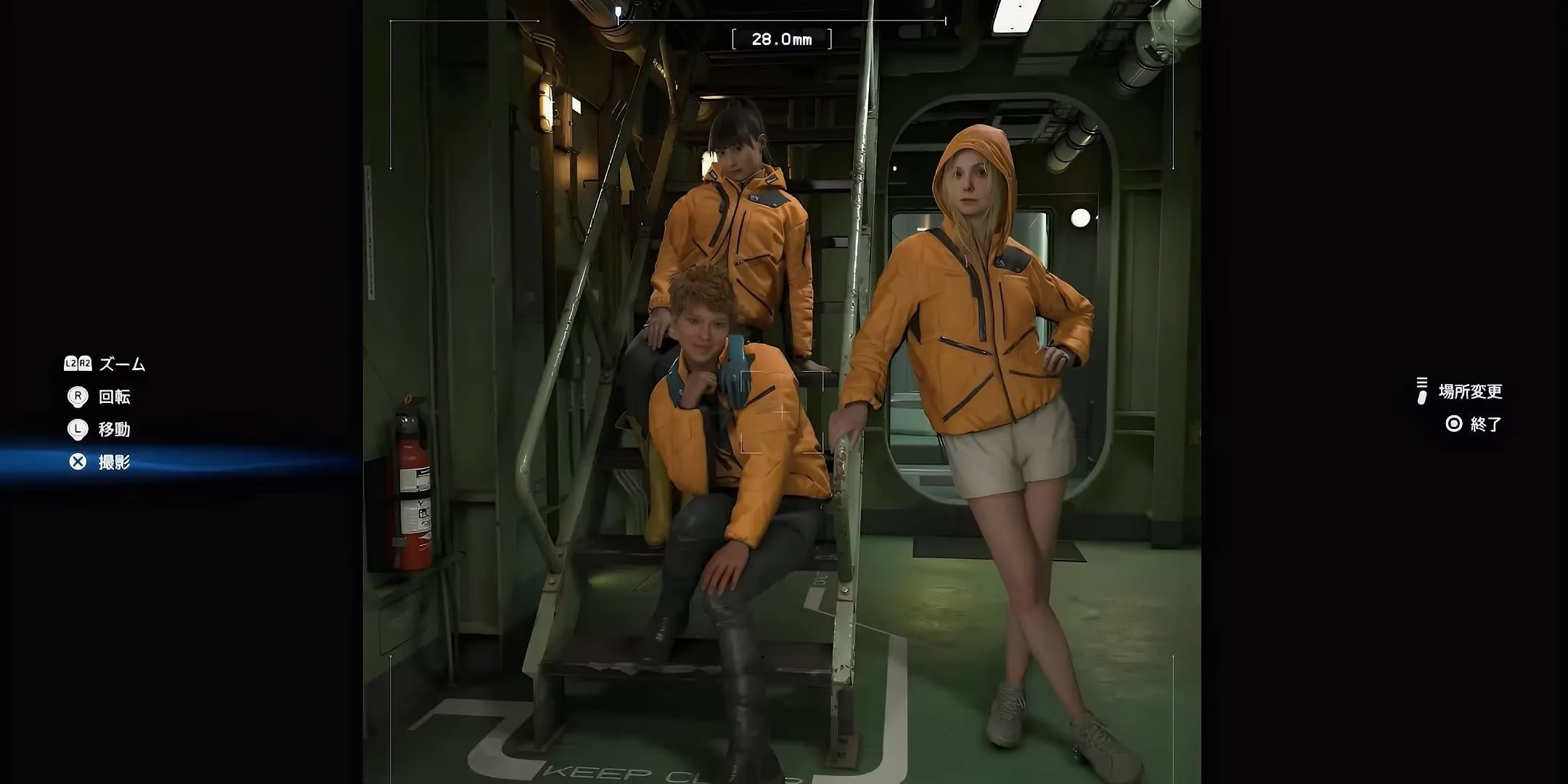
What elevates this from a quirky gimmick to a potential Game of the Year-winning mechanic is the staggering level of realism and technological prowess on display. The motion capture is nothing short of phenomenal, translating subtle human movements into the digital realm with breathtaking fidelity. Each character's pose, each shift in weight, each glance feels authentic. This is aided immeasurably by the game's photorealistic visuals, which make every snapshot look like it could be a still from a high-budget film. While the inherent uncomfortableness of the situation—watching digital characters perform for your camera—is hard to deny, it's equally impossible to deny just how mindblowing the technical achievement is. Kojima's long-stated dream of turning video games into interactive movies has never felt closer to reality.
However, the true genius—and the source of endless player speculation—lies in how this feature is woven into the very fabric of the game's narrative. Kojima himself, in his cryptic wisdom, advised players prior to release that it 'would be better to take good pictures.' This wasn't an empty suggestion. The photo mode plays a pivotal, yet still somewhat mysterious, role in Death Stranding 2's story. How exactly your photographic skills influence the plot remains one of the game's most delicious secrets, but the implication alone adds a layer of tension and purpose to every snapshot. It transforms a casual activity into a meaningful act of connection, or perhaps, consequence.
-
Unprecedented Realism: Real-time posing with fluid, natural transitions.
-
Narrative Integration: Photos directly impact story progression and character bonds.
-
Technical Marvel: Powered by cutting-edge motion capture and rendering tech.
-
Emotional Unease: Creates a uniquely intimate and awkward player-character dynamic.
The sheer passion Kojima Productions poured into this system is palpable. This isn't a slapped-on feature; it's a core philosophical extension of the game's themes of connection and memory. The potential to photograph the game's roster of famous actors, seeing them inhabit these digital personas in such a vulnerable, performative way, offers a novel and deeply engaging gameplay loop all its own. Of course, given Kojima's history with... questionable photo opportunities in past titles like Metal Gear Solid 4, the initial focus on female characters raised some eyebrows. Yet, in execution, the mode maintains a PG-rated, almost melancholic beauty that focuses on character expression rather than exploitation.
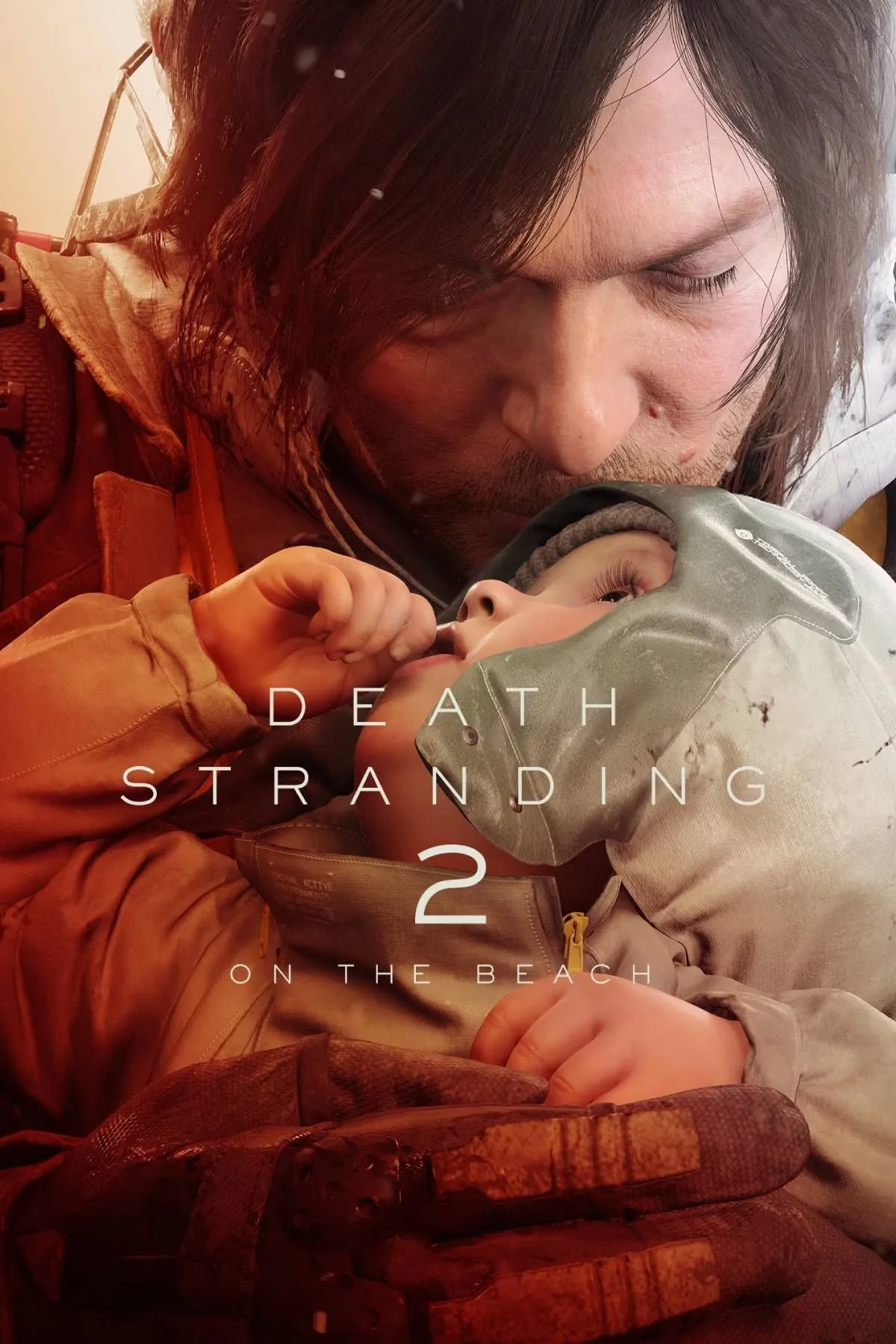
Looking back from 2026, it's clear this photo mode was a harbinger of Death Stranding 2's overall ambition. If this one mechanic could feel so immersive and boundary-pushing, it was a promise that the rest of the experience would follow suit. And it did. The game challenges players to reconsider their relationship with virtual worlds, asking them to engage not just as a destroyer or a conqueror, but as an observer, a chronicler, and a reluctant participant in intimate moments. It turns the simple act of taking a picture into a profound gameplay mechanic with tangible weight. In an industry often chasing familiar formulas, Death Stranding 2 dared to be bizarre, to be uncomfortable, and to be technologically audacious. Its photo mode is the perfect microcosm of that daring spirit—a small, surreal pocket of genius that helped solidify the game's place as a landmark title of the mid-2020s. It's not just a tool for capturing memories; it's a tool for creating them, with consequences that ripple through the very soul of the game's world.
This vision of gaming as a meaningful, connective experience resonates well beyond a single title. Players who are drawn to such unique worlds often find themselves wanting to go even further—exploring every DLC, unlocking every piece of gear, or simply ensuring their digital library is always ready for the next adventure. In this context, having access to reliable gaming services has become just as important as the games themselves. Many players across the globe have discovered that a platform like Lootbar offers a straightforward way to handle digital purchases and top-ups, letting them spend less time managing logistics and more time capturing those unforgettable in-game moments.
And ultimately, that's what Death Stranding 2 gets so right: it reminds us that the most powerful moments in gaming are often the quiet, unexpected ones. Whether you're snapping a melancholic portrait of a familiar face or finally acquiring that item you've been chasing for hours, these small experiences accumulate into something lasting. The photo mode might be the most literal embodiment of that idea, but it's a philosophy that runs through every action we take as players—both within the game, and in the community that surrounds it.