The survival game genre in 2026 has evolved beyond simple hunger bars and crafting menus. It has morphed into a grand, terrifying theater where the very world itself is the primary antagonist, a stage director orchestrating a symphony of player demise. Developers, in a desperate bid to stand out in an ocean of similar titles, have weaponized environments with a creative ferocity that would make Mother Nature herself blush. The games listed here are not mere playgrounds; they are meticulously designed deathtraps where the sun burns, the water drowns, the air poisons, and the ground itself conspires against the player's continued existence. Survival is no longer a matter of outlasting basic needs, but of outsmarting a world that feels unnervingly, deliberately hostile.
Stranded Deep: The Deceptively Deadly Paradise
The survival gameplay in Stranded Deep is the purest form of man-versus-environment, a brutal ballet performed on a stage of deceptive beauty. The idyllic, sun-drenched tropical seas are a Siren's call masking a world of pain. The environment here is as treacherous as a politician's smile—alluring on the surface but hiding countless sharp edges. The sun is not a source of life but a weapon, capable of inflicting burns and heatstroke with merciless efficiency. The beaches, seemingly soft and inviting, are sown with poisonous starfish scattered like organic landmines, waiting for an incautious step.
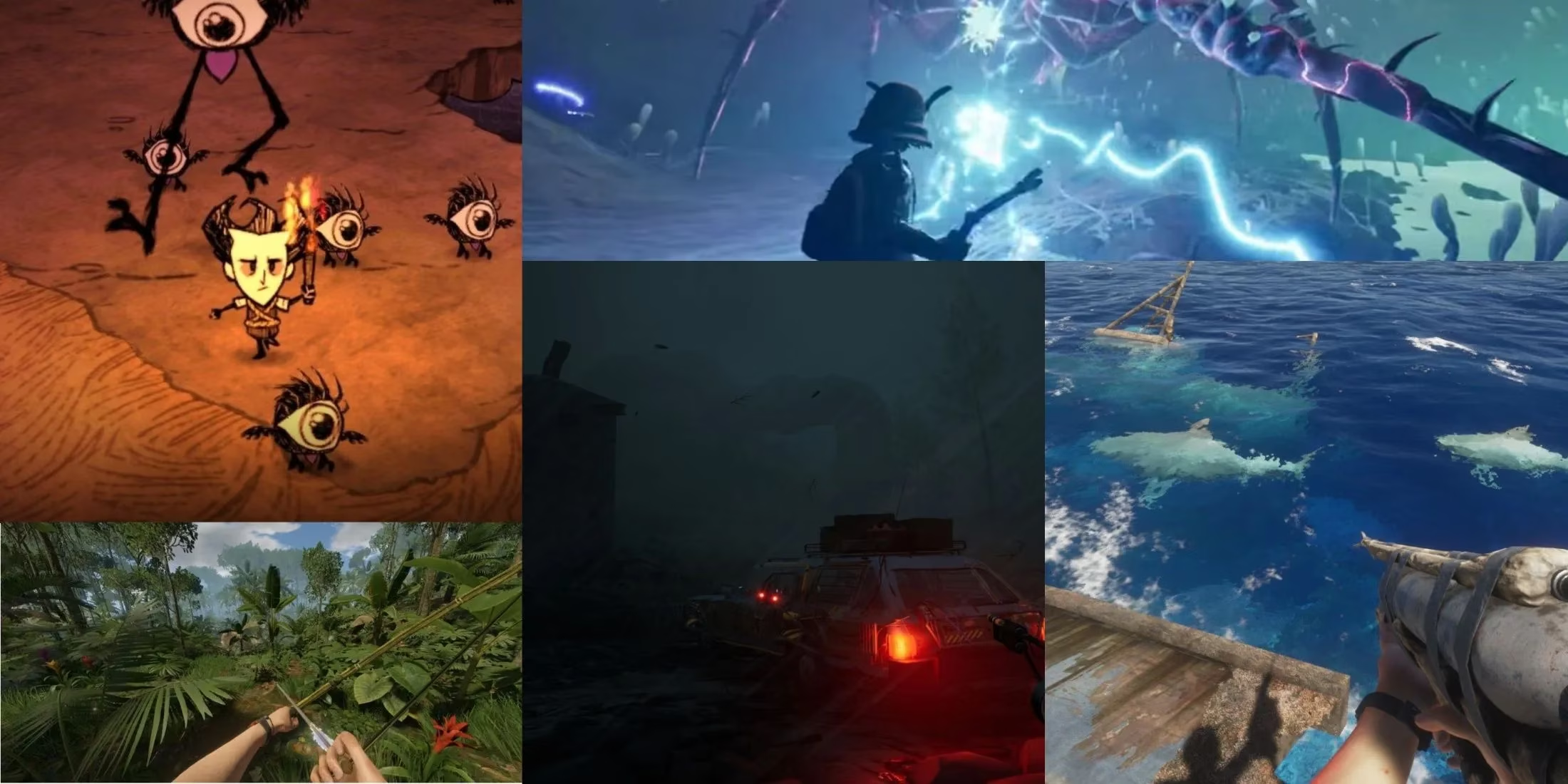
And then, there's the water. Venturing into the azure depths is a necessity for resources, turning every dive into a high-stakes gamble. The ocean is a liquid hunting ground, teeming with menacing sharks that patrol like silent, finned submarines. For much of the early game, players are utterly defenseless against these apex predators, making their sudden, violent appearances genuinely heart-stopping. The environment forces constant movement between islands, ensuring the player can never fully escape the feeling of being a snack-sized intruder in a domain ruled by tooth and fin.
7 Days to Die: The Player-Crafted Apocalypse
7 Days to Die shifts the focus from natural hostility to a more action-oriented, undead-infested nightmare. While it features standard environmental threats like extreme temperatures, its most unique hazards are the ones players themselves engineer. Base building is paramount, not just for shelter, but for constructing elaborate, automated death traps to survive the relentless weekly hordes. This turns the environment into a Rube Goldberg machine of dismemberment, where players are both the architect and the most frequent victim of their own designs.
-
Spike Pits: Simple, brutal, and equally dangerous to zombies and clumsy survivors.
-
Blade Traps: Whirring, spinning death that can turn a hallway into a meat grinder.
-
Electrical Fences: A shocking reminder that power has no loyalty.
The irony is thick; in fortifying one's home against the external threat, players fill it with internal ones. A single misstep, a forgotten trap activation, and the survivor becomes another piece of gore on their own floor. The environment's danger is a direct reflection of the player's ingenuity and paranoia.
Grounded: The Macrocosm of Menace
Grounded achieves its environmental horror through a radical shift in perspective. By shrinking the player down to the size of an ant, it transforms a peaceful suburban backyard into a vast, primordial wilderness. There are few traditional "environmental effects" here; instead, the environment is the enemy. A morning dew drop becomes a drowning hazard, a blade of grass a towering jungle, and a simple picnic table a mountainous plateau.
What's truly unique is how creatures are treated as environmental fixtures. Early on, spiders are not mere enemies to be fought; they are territorial landmarks as immovable and dangerous as active volcanoes, to be meticulously mapped and avoided. A lone ant is manageable, but an anthill is a roiling, chitinous natural disaster. Survival here feels less about conquering nature and more about navigating a world where you are permanently on the bottom of the food chain, a walking, talking crumb in a land of giants.
Don't Starve: The Landscape of Lunacy
Don't Starve takes a uniquely psychological approach to hostile environments. Its world is a gothic, Tim Burton-esque nightmare where dangers don't just harm the body—they erode the mind. The central Sanity meter is a masterstroke, turning the very act of perception into a survival challenge. Getting caught in the rain, wandering in the dark, or even examining strange monsters chips away at sanity.
As sanity dwindles, the world itself warps:
| Sanity Level | Visual Effects | Gameplay Hazards |
|---|---|---|
| High | Clear, crisp visuals. | Standard threats. |
| Low | Colors drain, shadows lengthen, creatures appear. | "Shadow Creatures" spawn and attack. |
| Critical | The world pulsates and distorts violently. | Constant auditory hallucinations, severe combat penalties. |
The environment becomes a funhouse mirror of the mind, reflecting the player's deteriorating mental state. A peaceful forest can morph into a terrifying gauntlet of phantom whispers and clawed shadows. Managing sanity is as crucial as managing hunger, making every environmental interaction a calculated risk for one's psyche.
Pacific Drive: Anomalous Road Rage
The genius of Pacific Drive lies in its fusion of survival mechanics with the ultimate symbol of man's conquest over nature: the automobile. Yet, in the Olympic Exclusion Zone, nature (or something far weirder) has fought back with a vengeance. The environmental hazards here are not storms or predators, but reality-warping "anomalies" that turn a simple drive into a desperate science experiment.
Players must discover how these anomalies function through context and perilous trial-and-error:
-
Semi-Sentient Bollards that chase your car like angry metal penguins.
-
Radioactive Clouds that silently eat away at your vehicle's integrity.
-
Gravity Wells and Unstable Matter that can fling your station wagon like a toy.
The car is both lifeline and liability, a metallic hermit crab shell that you must constantly repair and upgrade while the very fabric of the environment tries to peel it apart. It's a survival loop that feels fresh and constantly tense, where every scrap of loot is weighed against the risk of encountering an anomaly that defies all logic.
Green Hell: The Granular Grinder
Green Hell is the survival simulator for masochists. It takes the already formidable threat of a real-world Amazonian jungle and dials it up to eleven, treating it with a clinical, terrifying seriousness. This isn't about fighting monsters; it's about succumbing to a thousand tiny, ignoble deaths. The environment is a gigantic, digestive system, slowly breaking down the player through attrition.
The granularity is staggering. A simple cut can become infected, leading to fever. Eating the wrong mushroom or berry induces vomiting and diarrhea, spiraling into dehydration. Leeches burrow, worms infest, and sanity dips from isolation and fear. Players must learn to identify plants, treat wounds realistically, and listen to their body's cues. Dying to a jaguar is quick and dramatic; dying from a parasite-induced fever after eating a contaminated snail is slow, humiliating, and a powerful lesson in the jungle's absolute, indifferent dominance.
No Man's Sky: The Cosmic Menagerie of Mayhem
Through nearly a decade of relentless updates, No Man's Sky has curated perhaps the most diverse portfolio of environmental hazards in gaming history. Each of its quintillions of planets is a roll of the cosmic dice, offering a new suite of ways to die. The streamlining of hazard protection (a simple thermal/toxicity/radiation/etc. shield) belies the breathtaking visual and experiential variety.
-
Aggressive Flora: Plants that snap, poison, or explode.
-
Extreme Storms: Firestorms of swirling embers, superheated rain, or eerie green nuclear tempests.
-
Megafauna: Giant worms that erupt from the earth like living earthquakes.
-
Derelict Freighters: Zero-g, horror-filled labyrinths in the vacuum of space.
-
Corrupted Planets: Landscapes twisted by malevolent energy, with their own unique rules.
The environment in No Man's Sky is a kaleidoscope of catastrophe, ensuring that exploration is always coupled with a sense of awe and apprehension. Sitting in your ship's cockpit, watching a firestorm rage across an alien valley, is a visceral reminder of the universe's sublime and deadly beauty.
Subnautica: The Abyssal Anxiety Simulator
The core environmental hazard of Subnautica is elegantly simple and universally terrifying: the lack of air. Planet 4546B's alien ocean is a vast, beautiful prison where oxygen is the primary currency. This fundamental limitation shapes every action. Early dives are short, panicked affairs, with the player constantly eyeing a depleting O2 meter. Progress is literally measured in depth—the ability to go deeper, to stay longer, to conquer the crushing pressure and darkness.
The ocean itself is the antagonist, a liquid labyrinth of leviathans where light fades into an inky blackness punctuated by bioluminescent nightmares. From the piercing shriek of a Reaper Leviathan in the murk to the silent, gaping maw of a Ghost Leviathan in the abyss, the environment uses fear of the unknown and the crushing weight of the deep as its primary weapons. It's a masterclass in atmospheric terror, proving that the most hostile environment isn't always the one actively attacking you, but the one that simply, patiently, waits for you to make a single mistake.
For those who thrive on the thrill of survival, the gaming world offers a plethora of environments that challenge even the most seasoned players. Whether navigating the treacherous jungles, the cosmic unpredictability of alien worlds, or the unfathomable depths of an aquatic planet, these settings provide unforgettable experiences. However, surviving these virtual landscapes requires not only skill but also keen strategic thinking and resource management.
To further enhance your gaming experience, exploring additional resources can be invaluable. Lootbar offers insights and tips to help players tackle these environments effectively. By accessing a wealth of information and community-driven strategies, players can equip themselves with the knowledge needed to conquer even the most daunting digital ecosystems. Whether you're seeking advice on dealing with aggressive flora or finding ways to extend your underwater explorations, Lootbar provides a supportive hub for gamers looking to elevate their survival skills.