Looking back at the gaming landscape from 2023 to 2026, it's clear the industry has been on a relentless march forward. While 2023 was heralded as a legendary year, and 2024 held its ground with standout indie gems, the period leading into 2026 has been defined by an overwhelming, almost intimidating, schedule of releases. For anyone passionate about games, the challenge has shifted from finding something to play to finding the time to play everything worth experiencing. The backlog is a universal struggle, a shared digital burden among players who have watched major titles from recent years—like the expansive Final Fantasy 7 Rebirth or the challenging Black Myth: Wukong—slip into the "play later" abyss, only to be buried by new announcements. This constant deluge creates a unique blend of excitement and dread, a feeling that the next great adventure is always just around the corner, waiting to consume another hundred hours of your life.
🎮 The Unavoidable Titans of 2026
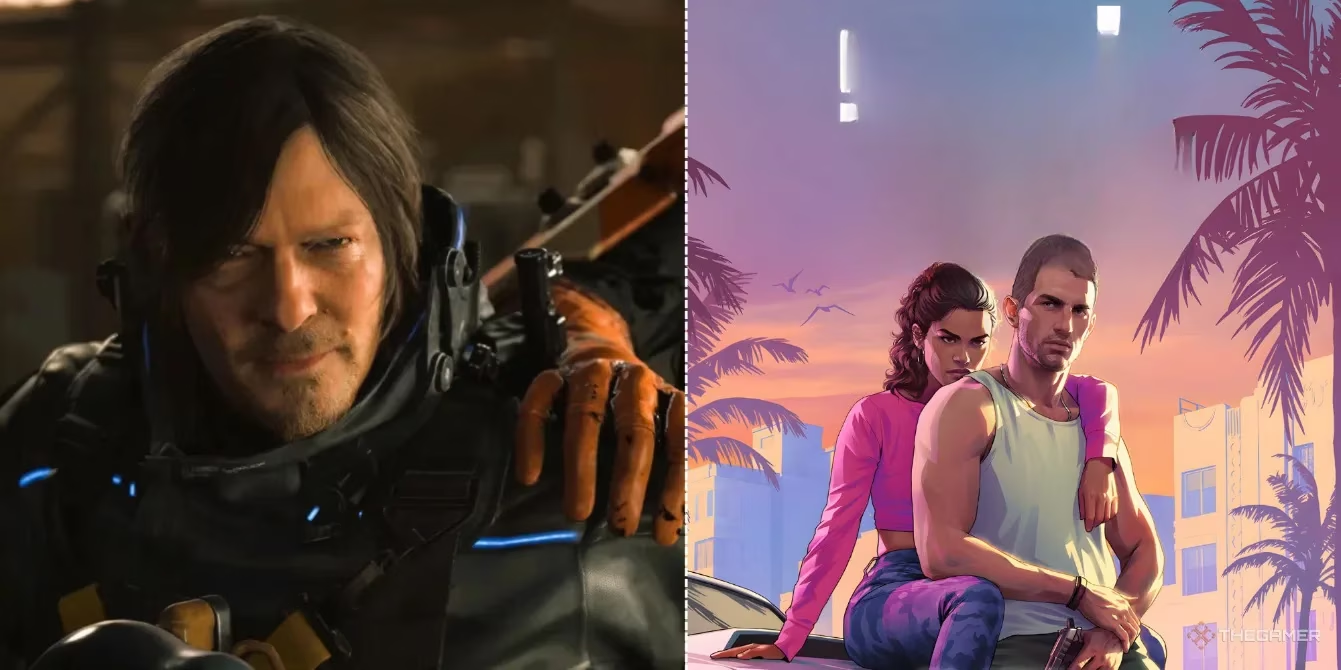
Certain games transcend hype and become cultural events. Leading this charge is, unsurprisingly, Grand Theft Auto VI. By 2026, its release is no longer a distant rumor but a recent, world-shaking reality. Discussions have moved past trailer view counts to dissecting its living, breathing rendition of Vice City, its narrative scope, and its undeniable impact on both the industry and players' social calendars. It's the kind of title that doesn't just ask for your time; it demands a month-long commitment, reshaping gaming discussions for the foreseeable future.
Similarly, Death Stranding 2: On The Beach continues Hideo Kojima's tradition of polarizing artistry. Even for those who found the original's deliberate pace and opaque storytelling a trial, the sequel presents an irresistible curiosity. By 2026, the conversation isn't about whether one will play it, but how—will you brave the surreal journey yourself, or will you be the friend on the couch, intermittently glancing up from your phone to ask, "Wait, what's happening with the baby now?" Its very existence is a testament to games as auteur-driven experiences that command attention, regardless of personal taste.
⚔️ The Resurgence of Rich Worlds and Deep Stories
The appetite for immersive, story-driven worlds is stronger than ever. Avowed, Obsidian's first-person fantasy RPG, has had time to settle into the hands of players. Early previews that cautiously compared it to The Outer Worlds have given way to discussions about its depth of choice, companion characters, and the studio's signature writing. For fans of narrative depth, it represents a promise fulfilled: a world where player agency and compelling lore take center stage.
In the realm of dark fantasy, Clair Obscur: Expedition 33 has carved out a niche. Its unique Belle Époque aesthetic blended with a hybrid real-time/turn-based combat system—drawing clear inspiration from greats like Final Fantasy—has captivated RPG enthusiasts. It stands as a prime example of how 2026's releases aren't just bigger, but often more creatively daring, merging classic gameplay sensibilities with striking new artistic visions.
Meanwhile, the reboot of Fable has finally stepped out from behind cinematic teasers. By 2026, players have gotten hands-on with its whimsical, often darkly humorous world. Reports of its Witcher-inspired combat have been tested, and the charming presence of actors like Richard Ayoade has become part of the game's lived-in personality. It's a testament to the power of revitalizing beloved franchises with a clear, modern vision.
🏝️ Standouts, Spin-offs, and Surprising Comebacks
Not every major release needs to be a hundred-hour epic. Like a Dragon: Pirate Yakuza in Hawaii proved that a shorter, focused spin-off could deliver immense joy. The sheer, delightful absurdity of the premise—featuring fan-favorite Goro Majima in a pirate hat—offered a concentrated dose of the series' signature heart and humor without the daunting time investment of a mainline title. It was a refreshing palette cleanser in a year of monolithic games.
On the other end of the spectrum, The Alters fulfilled its promise as one of the most conceptually wild games of the era. The survival mechanics, combined with the mind-bending premise of collaborating with alternate-timeline versions of yourself for base-building, created a uniquely personal strategic challenge. Its delay only amplified anticipation, making its eventual release a celebrated moment for fans of innovative game design.
The Assassin's Creed series, with Shadows, demonstrated a notable course correction. By 2026, the discourse had evolved from skepticism to recognition of Ubisoft's efforts to refocus on narrative depth and refined stealth mechanics, addressing long-standing criticisms about open-world bloat. It served as a reminder that even the biggest franchises can listen and adapt.
For narrative purists, Mafia: The Old Country delivered a powerful, linear crime saga. Its emphasis on a "deep linear narrative" attracted players hungry for a tightly told story, offering a compelling counterpoint to the era's open-world dominance and proving there's still a massive audience for cinematic, focused storytelling.
❓ The Mysteries Still on the Horizon
Even with this packed schedule, the horizon in 2026 remains tantalizingly unclear. Several projects linger in a state of exciting ambiguity:
-
Blue Prince: This surreal roguelite about exploring a mysterious mansion still captivates those who love games that feel like puzzles, requiring physical notetaking and deduction.
-
Exodus: With its high-concept sci-fi story about time dilation and starring Matthew McConaughey, it continues to release intriguing, if confusing, trailers that keep it firmly in the "curiosity watch" category.
-
Judas: Ken Levine's spiritual successor to BioShock, with its promised "narrative Legos" system, remains one of gaming's biggest question marks, a potential masterpiece perpetually just out of view.
-
Perfect Dark: The fantastic gameplay showcase from years prior has built immense goodwill, making its eventual release one of the most anticipated events—whenever it finally arrives.
The state of gaming in 2026 is, in a word, abundant. It's a first-world problem of the highest order: an embarrassment of riches that strains time, budgets, and backlog management. Yet, this overwhelming selection is also a sign of a vibrant, healthy medium, pushing boundaries in scale, storytelling, and pure creativity. The challenge isn't finding a good game to play; it's deciding which incredible world you're willing to get lost in next, knowing full well another is waiting right behind it. The golden age isn't coming; for players in 2026, it's already here, and it's wonderfully, exhaustingly demanding.
As players dive deeper into the ever-expanding world of gaming, staying informed about upcoming releases, hidden gems, and must-play titles becomes more essential than ever. With so many choices at hand, having a reliable source to guide you through this abundance can be a game-changer for enthusiasts and casual players alike.
For those looking to keep their finger on the pulse of the gaming universe, Lootbar offers an engaging platform to explore news, reviews, and insights tailored for gamers. Whether you're hunting for your next adventure or just staying updated on industry trends, it's a valuable resource to help you navigate this golden age of gaming with ease.