You know, as someone who's been playing Hideo Kojima's games for years, I've always been fascinated by how he doesn't just use a console—he converses with it. His design philosophy feels like a direct dialogue between the creator and the player's hardware. Looking back at classics like the original Metal Gear Solid on PlayStation 1, the fight against Psycho Mantis wasn't just a boss battle; it was a hardware hack. Mantis forced you to physically move your controller port and read your memory card to taunt you. That moment shattered the fourth wall in a way that felt personal and invasive. It’s 2026 now, and while wireless controllers have made the port-switching trick obsolete, I can't help but wonder how Kojima might resurrect that same feeling of being personally seen and called out by the game itself. With Death Stranding 2 potentially launching across multiple platforms, the old memory card trick is dead, but a new, nearly universal system has taken its place: achievements and trophies. Imagine an antagonist, maybe someone like Higgs, not just talking to Sam Bridges, but talking directly to you, the player, about your gaming history. Now that would be a modern Psycho Mantis moment.
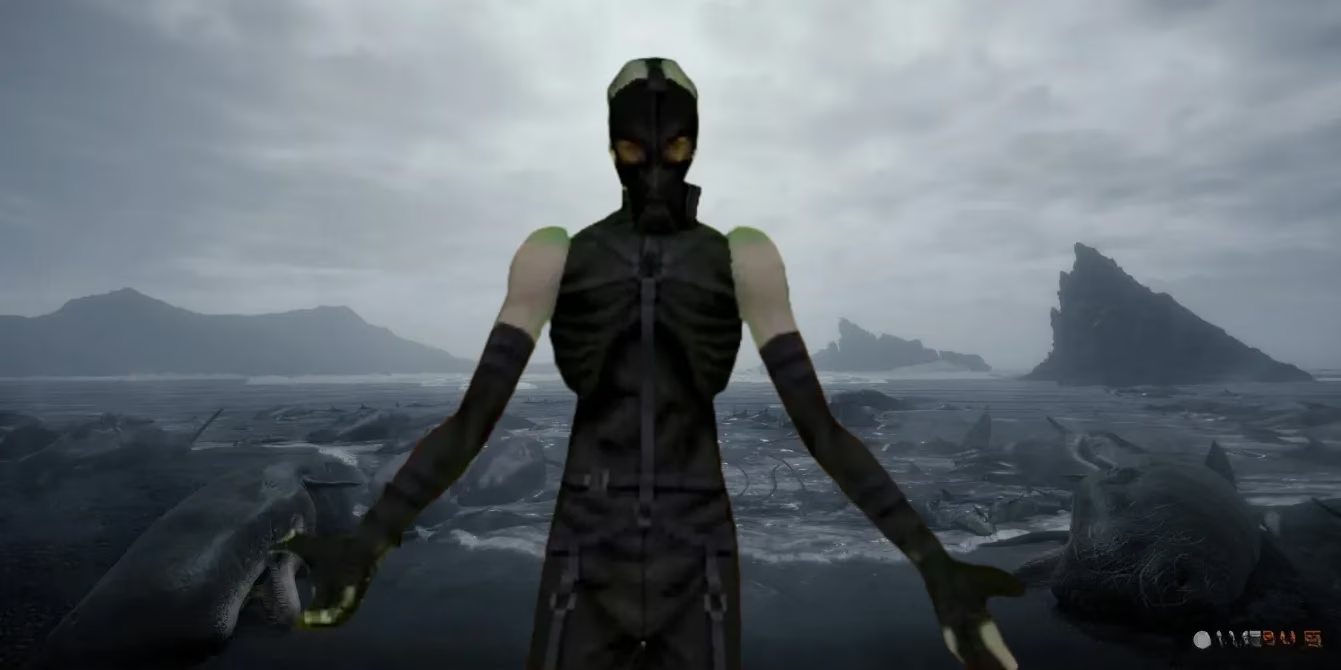
Let's break down why achievements are the perfect new frontier for Kojima's brand of mind games. Back in the day, memory cards were these physical vessels of our digital selves. Psycho Mantis rifling through yours was a violation of your gaming space. Today, that space isn't a physical card; it's your trophy list or achievement profile. It's a curated record of your triumphs, your grind, and sometimes, your shameful unfinished business. 😅 A character breaking the fourth wall to comment on that would hit just as hard. They could ironically praise you for that ultra-rare Platinum you're so proud of, making you question if your dedication is admirable or... something else. Conversely, they could mock you for that one embarrassingly easy achievement you still haven't unlocked in a five-year-old game. It’s personal data that's already being tracked by the platform—Kojima would just be weaponizing it for narrative effect.
Implementing this would be a technical dance, for sure, but a fascinating one.
-
On PlayStation and Xbox, the systems are mature and deeply integrated. A game could request permission to read a player's public trophy/achievement data.
-
On PC (via Steam, Epic, etc.), similar APIs exist for achievements, making it a cross-platform possibility.
-
The main challenge would be a platform like the Switch 2, which historically hasn't had a formal achievement system. If Kojima wants a uniform experience, he might design a fallback or a different, platform-specific trick for that version.
The genius of this approach is its scalability and personalization. The taunts wouldn't be one-size-fits-all; they'd be generated based on your specific digital footprint. It turns a universal game mechanic into a unique, slightly unsettling personal experience.
This isn't just about a cool gimmick, though. The Psycho Mantis fight endures because it fundamentally changed the player's relationship with the threat. One moment you're playing a game, the next, the villain is in your room, commenting on your save files. It eliminated the safe, detached feeling of being just a player. For a series like Death Stranding, which is all about connection, alienation, and unseen forces, this technique is a perfect fit. The game's world is already one of psychic landscapes and Beach-side nightmares. Having an entity like Higgs or a new Seamstress character peer not just into Sam's mind, but into the player's gaming history, would deepen that eerie, mystical atmosphere. It would assert the antagonist as a truly omniscient force, blurring the lines between Sam's struggle and our own.
Of course, some might say it's predictable or retreading old ground. But I'd argue the context makes it new. In an age of cloud saves and digital libraries, our connection to our gaming history is more abstract but no less personal. A modern take wouldn't just copy the trick; it would evolve it for a new era of players who define their gaming identity through achievement scores and completion percentages. It would be a commentary on gaming culture itself.
Ultimately, Kojima's greatest strength is making the medium itself part of the message. The controller rocking in Death Stranding to soothe BB wasn't just a motion control; it was a tactile metaphor for care. Reading achievements to break the fourth wall wouldn't just be a reference—it would be a statement about how we play, what we value, and how games can still find ways to surprise us by looking at the data we leave behind. As we await Death Stranding 2, I'm not just excited for the story; I'm excited to see what new conversation Kojima starts with my console, and by extension, with me.
As we delve deeper into how games can integrate personal data to enhance storytelling, it's fascinating to see how different gaming communities respond to these innovations. Whether you're a casual gamer or a hardcore completionist, understanding how your gaming history can interact with new game mechanics adds a layer of engagement that goes beyond mere gameplay. For those interested in exploring how their gaming achievements stack up or looking for insights into the latest trends in gaming culture, Lootbar offers an excellent platform to dive into these aspects. With its comprehensive approach to gaming data, it serves as a valuable resource for players wanting to keep up with the evolving landscape of video game narrative techniques.