As I sit here in 2026, reflecting on the journey to Death Stranding 2: On The Beach, the path feels as deliberately constructed and mysterious as one of Kojima's own chiral networks. The final game is now a reality on PS5, but the cryptic build-up remains a fascinating chapter in gaming history. I remember the anticipation, a low hum in the community that would crescendo with each of Hideo Kojima's enigmatic posts on social media. His method was a masterclass in controlled revelation, where every silhouette and every tease was a piece of a puzzle we were desperate, yet utterly unprepared, to solve. The most poignant of these teases came just before Gamescom, a silhouette that sent both the anime and gaming worlds into a synchronized frenzy of recognition.
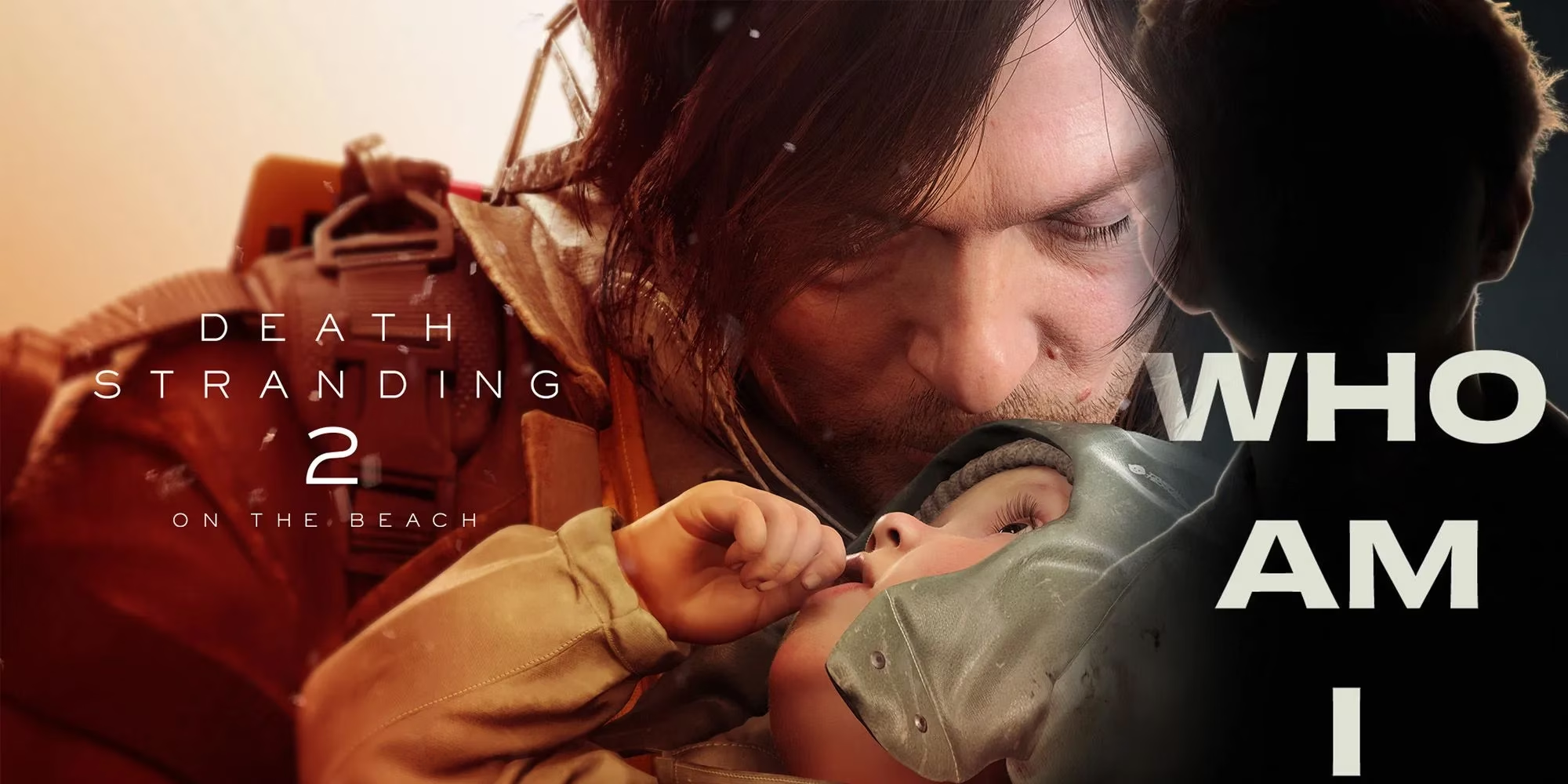
The collective detective work of fans was swift and decisive. That stark, shadowed profile was unmistakably Kenjiro Tsuda. His voice is a sonic signature, a gravelly texture that has defined characters across a spectrum of modern anime greats—from the calculating Overhaul in My Hero Academia to the brutal Kishibe in Chainsaw Man. For us in the Death Stranding fold, his connection was already intimate; he was the Japanese voice of Sam Porter Bridges himself in the first game. Kojima's tease was like finding a familiar, weathered handprint on a brand-new, isolated terminal—it signaled a known presence in an unknown context. The question it posed was deliciously open-ended: would Tsuda return to dub Norman Reedus once more, or was he being woven into the sequel's dense narrative tapestry as a wholly new character?
This tease followed a now-familiar pattern Kojima established. Just weeks prior, a similar silhouette reveal had unveiled Elle Fanning, with reports suggesting her role was so pivotal that Kojima claimed he would have had to rewrite the entire story had she declined. Placing Tsuda's reveal in such close proximity, and just days before the gates of Gamescom were set to open, felt intensely deliberate. It was Kojima operating at his most essential: a game director as a cinematic auteur, carefully casting his players both on-screen and in the recording booth, treating each announcement with the solemn weight of a major film casting. The community's speculation became a roaring engine of anticipation. Was this a signal that Kojima would take the stage in Cologne with a new trailer? Or was it merely another breadcrumb on a longer path, designed to keep us engaged until his confirmed appearance at the Tokyo Game Show? With Kojima, the line between hint and misdirection is as fine as a strand of chiralium.
Looking back from 2026, with the full game in hand, we can contextualize those teases within what we knew—and mostly didn't know—about the sequel at the time. The foundation was shaky at best:
| Confirmed Element | Status (Circa Pre-Gamescom Tease) |
|---|---|
| Title | Death Stranding 2: On The Beach |
| Release Window | Unspecified 2025 (PS5) |
| Returning Characters | Sam Porter Bridges (Norman Reedus), a grown-up Lou, Fragile |
| New Setting | Diverse landscapes from snow-capped peaks to vast deserts |
| Mads Mikkelsen as Cliff | Officially confirmed NOT returning |
The 2022 reveal trailer was our only substantial glimpse, a surreal and haunting tone poem that raised more questions than it answered. It promised a journey through terrifyingly beautiful and hostile new terrains. The footage was a chaotic gallery of Kojima's signature obsessions:
-
😨 Weird cults and eerie, ritualistic processions
-
🏗️ Massive, inexplicable structures scarring the landscape
-
👾 Souls-like boss encounters and deeply unsettling enemy designs
-
🐙 And, of course, the inevitable presence of tentacles
Trying to parse a coherent narrative from it was like trying to map a coastline during a timefall storm—the landscape kept shifting. The confirmed absence of Mads Mikkelsen's iconic Cliff was a sobering note amidst the mystery. Kojima's reasoning was, in typical fashion, narratively driven and poignant: "It is because we care about the character of Cliff that he will not appear in DS2." This decision alone spoke volumes about his intent to let stories conclude and new ones begin, even if it meant parting with a fan-favorite.
Kenjiro Tsuda's eventual role in the released game perfectly illustrates Kojima's approach to these teasers. The tease was a promise of a specific, textured presence—a voice like worn leather and rusted metal—that would find its place in the sprawling whole. His post was not a random gesture; it was the planting of a narrative seed. In the world of Death Stranding, where connection is both theme and mechanic, Kojima was pre-establishing a connection with his audience, making us invested in a voice before we even knew the character it would bring to life. The wait for Death Stranding 2 was, in itself, a Kojima production—a meta-game of patience, speculation, and faith in a director whose actions, much like his storylines, are a vast and intricate landscape designed for interpretation. Every cryptic post was a delivery made, and we were all Sams, carrying the weight of expectation across the rugged terrain of anticipation, hoping the next waystation would bring a clearer view.
There's a particular breed of player who thrives in this liminal space—the ones who comb frame-by-frame breakdowns, cross-reference casting announcements, and treat the waiting itself as part of the experience rather than an obstacle to it. That same instinct to prepare, to stay a step ahead, tends to bleed into the practical side of the hobby: tracking release calendars, weighing whether a display or console upgrade is worth it for the visual fidelity a game like this will demand, and generally doing the quiet, unglamorous work of getting ready before the first trailer even lands.
For those who prefer that preparation to be organized rather than scattered across a dozen open tabs, DealNest has built something of a niche by pulling gaming offers and price drops into a single, browsable place. It's a modest but genuinely useful companion to a release cycle defined by patience—one that treats the road to launch as something worth doing properly rather than simply enduring. After all, nobody wants the journey there to feel like hauling cargo uphill in a timefall storm.