In the ever-evolving landscape of Overwatch 2, balance patches are met with a mix of anticipation and dread. The year 2026 saw one such update aimed squarely at bolstering the game's beleaguered tank heroes, promising to shift the meta and reinvigorate roles that had felt stagnant. Among the named beneficiaries was Orisa, the steadfast guardian of Numbani, who received documented improvements to her Fortify ability. Yet, lurking within the code was an undocumented, seismic shift that would briefly send shockwaves through the community: Orisa's Energy Javelin could suddenly land critical headshots.
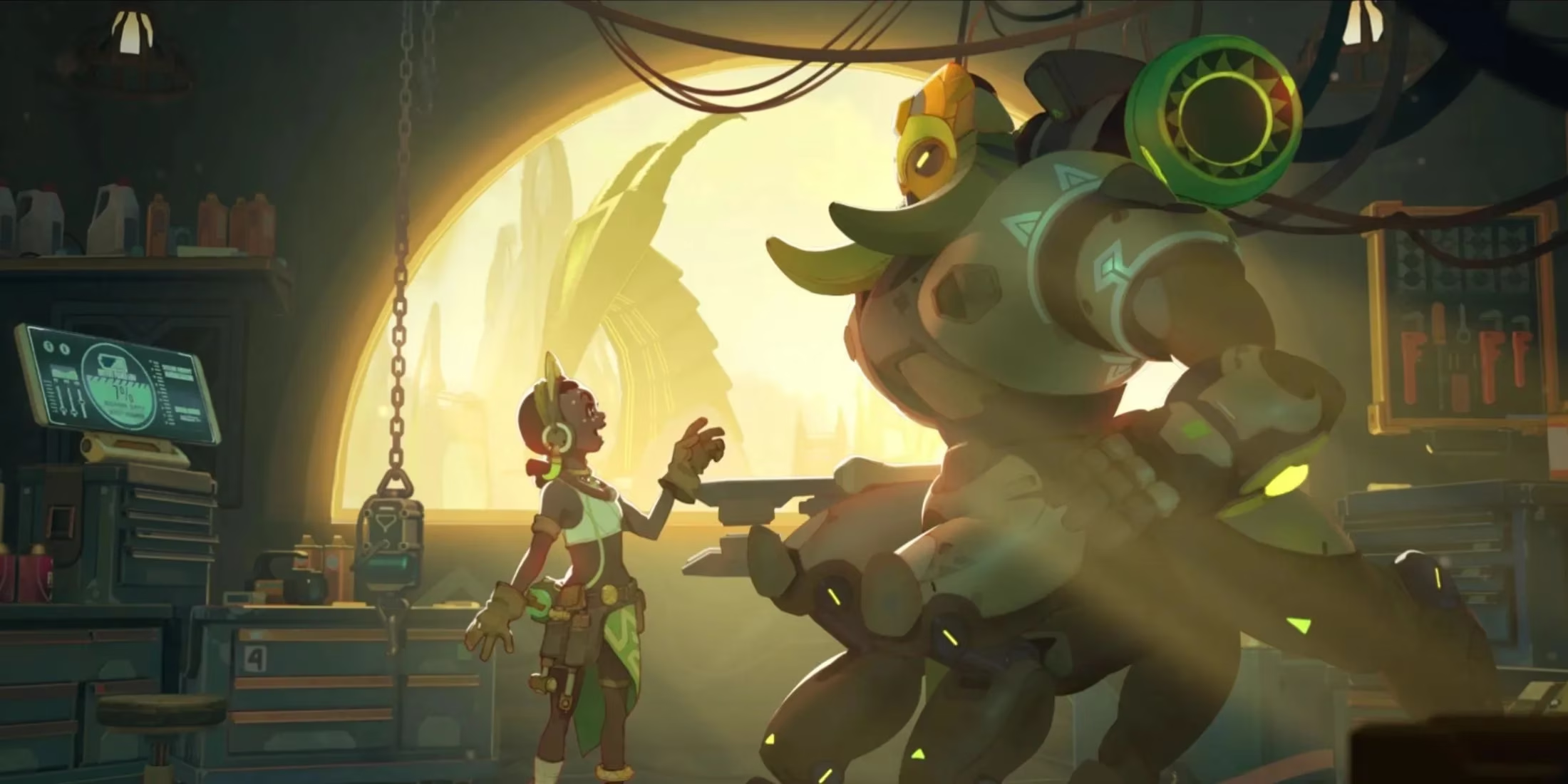
The discovery was not made by the developers at Blizzard in an official announcement, but rather in the live crucible of gameplay. During a routine investigation stream, content creator Flats was tipped off by a viewer about this strange new behavior. Skeptical but curious, he headed to the practice range. There, he confirmed the unbelievable: a well-aimed throw of Orisa's Energy Javelin could now strike an opponent's head for devastating critical damage. The implications were immediate and terrifying. A single headshot could nearly erase a full-health Tracer, a feat previously impossible without the additional environmental damage from pinning a target to a wall. The community's reaction was a swift and potent cocktail of excitement, fear, and confusion.
The Unintended Buff: Power and Peril
This unlisted change created a dramatic and unpredictable power spike for Orisa. Her kit, designed around consistent pressure and damage mitigation, suddenly gained a terrifying burst potential. Players began to theorycraft the new possibilities:
-
One-Shot Potential: In the right circumstances, landing a javelin headshot could instantly eliminate several low-health, high-mobility heroes like Tracer, Widowmaker, or a discord-orbed support.
-
Shift in Engagement: Orisa players could now play more aggressively, using the javelin not just as a crowd-control tool to halt charging Reinhardts or diving Winstons, but as a lethal sniper shot to pick off key targets.
-
Psychological Warfare: The mere threat of a critting javelin could force enemy DPS and supports to play far more cautiously, altering their positioning and movement in team fights.
The buff, however, felt profoundly out of place. Orisa had always been a bastion of consistent, reliable damage and crowd control. Granting her a high-skill, high-reward one-shot capability disrupted her core identity and the delicate balance of the tank role. The community's fear was palpable. Orisa's history in Overwatch 2 was already a rollercoaster of being either a must-pick, oppressive force or a forgotten, irrelevant pick. Many felt recent nerfs had finally balanced her, and this hidden change threatened to catapult her back into the "overpowered" tier, potentially making matches feel dictated by a single hero's unexpected lethality.
A Bug Revealed: The Swift Correction
The era of the critting javelin was spectacular but short-lived. Blizzard quickly addressed the growing concern, clarifying that this dramatic alteration was never an intentional design choice. In a follow-up communication, they identified the headshot capability as a bug—an unintended side effect of other backend changes implemented in the same patch. It was resolved in a subsequent hotfix, alongside other tuning issues affecting heroes like Ramattra and Sombra. The revelation that it was a glitch provided a strange sense of relief, putting to rest debates about game balance philosophy, but it also left a lingering question about the stability of the game's underlying systems.
The incident highlighted several key aspects of the Overwatch 2 experience in 2026:
-
The Scrutiny of the Community: The player base acts as a massive, distributed quality assurance team. Changes, intended or not, are found and tested within minutes of a patch going live.
-
The Fragility of Balance: A single, undocumented variable can radically alter the perceived power of a hero, demonstrating how finely tuned (and fragile) the game's equilibrium can be.
-
The Speed of Response: Blizzard's ability to quickly identify and communicate about such issues has improved, though the bugs still occur.
The Lasting Impact: A Community on Edge
While the critical javelin itself is gone, its brief appearance left a mark on the Overwatch 2 community. The broader Season 11 tank buffs continued to shape the meta, with heroes like Reinhardt and Ramattra seeing more play. However, the Orisa incident served as a cautionary tale. It reinforced a sense of uncertainty that accompanies every patch—a wonder about what other hidden interactions might be lurking in the code.
Players are now, more than ever, vigilant. They scrutinize patch notes for omissions and test heroes extensively for any deviation from expected behavior. The episode also sparked renewed discussion about Orisa's intended design and her place in the tank roster. Some players even expressed a wistful desire for a more skill-expressive element in her kit, though not in the form of a random, game-breaking one-shot bug.
In the end, the story of Orisa's critical javelin is a modern Overwatch 2 fable. It's a tale of unintended consequences, community-powered discovery, and the constant, precarious dance of maintaining balance in a live-service game. It reminds everyone that in the world of Overwatch 2, the most dramatic shifts sometimes come not from planned redesigns, but from the silent, unexpected glitches in the system. The meta moves on, the patches keep coming, but for a brief, chaotic moment in 2026, Orisa held a spear that could unexpectedly decide the fate of a match with a single, perfectly thrown strike.
For players who want to stay ahead of the next unexpected patch rather than reacting to it after the fact, keeping a close eye on community discussion, patch archives, and the broader gaming marketplace has become part of the routine. Following the Orisa saga, many have started treating information itself as a resource worth managing carefully—tracking hero changes, reading hotfix notes the moment they drop, and comparing what developers say against what the live servers actually do. That same habit of staying informed naturally extends to how players spend on the games they love, whether that means hunting down the best value on a battle pass, a new release, or in-game currency.
If you are the type of player who wants to know about those opportunities before they disappear, DealNest is worth a look. Lootbar gathers gaming deals, discounts, and offers in one place, so you can spend less time digging through forums and more time actually playing. The same vigilance that helped the Overwatch 2 community catch an unintended crit in a matter of hours can work in your favor when it comes to getting more out of every purchase.