As a long-time player who's seen the ebb and flow of Overwatch 2's updates, I have to say, the latest mid-season patch for Season 11 has us all talking. While the recent Transformers crossover and the controversial tank buffs have dominated headlines, there's one quiet addition that's genuinely changing how we play the game. Let me tell you, seeing those enemy health bars pop up when they're low on HP? It's a complete game-changer, and honestly, it's about time.
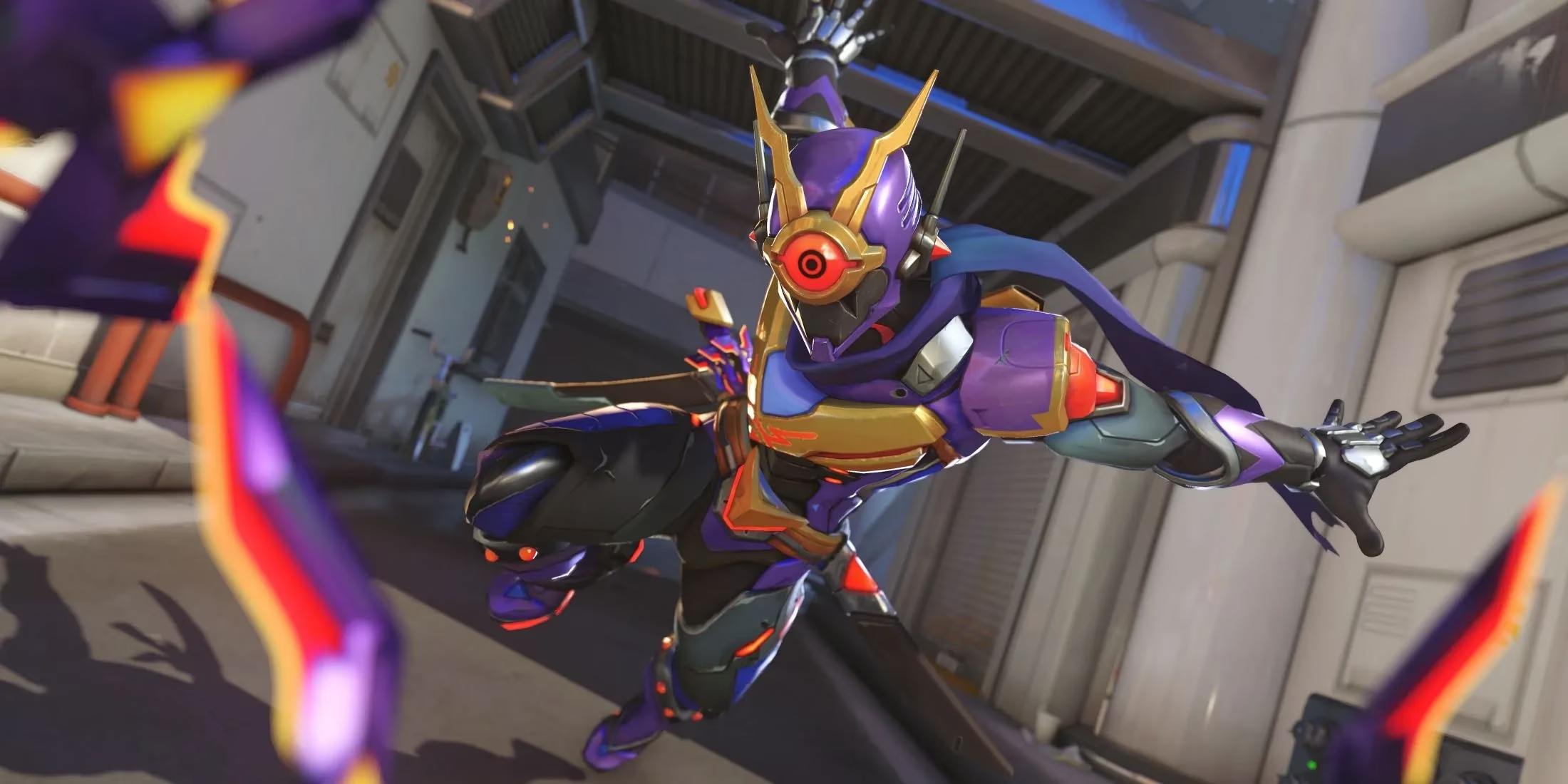
The feature itself is beautifully simple. When an enemy hero's health drops below a certain threshold, their health bar becomes visible to your entire team. No more guessing if that fleeing Genji is one shuriken away from defeat or if you should commit your ultimate. The information is right there, clear as day. This might sound like a small tweak, but in the fast-paced, split-second decision-making world of Overwatch 2, it's monumental. It turns potential uncertainty into actionable intel.
Why This Feature is a Solo Queue Lifesaver
For those of us who frequently brave the matchmaking queues alone, this is nothing short of a revelation. Previously, securing a kill on a low-health target required either perfect communication (rare in solo queue) or a lucky guess. Now, the game does the communicating for us. I've seen it firsthand—a Winston diving into the backline can now instantly identify the most vulnerable target, a Tracer can clean up a fight with surgical precision, and a support can make a calculated decision to finish off a weak enemy instead of purely healing. It reduces the frustration of near-misses and empowers individual players to make smarter, more impactful plays. It's like the game finally gave us a common language.
The Community's Verdict: Overwhelmingly Positive
The player base's reaction has been a rare, unified chorus of praise. On forums and social media, the sentiment is clear. Let's break down what players are saying:
-
The 'Game-Changer' Label: Many, like Reddit user Ts_Patriarca, have called it exactly that. They highlighted how transformative it is for flankers like Tracer, whose entire role revolves on picking off weakened targets. It turns their job from a high-risk gamble into a calculated strike.
-
Tank Players Rejoice: Dive tanks like Winston and Wrecking Ball are loving it. One player shared how they secured multiple kills that would have simply gotten away before. The ability to see a low-health enemy through a crowd or around a corner allows for aggressive, fight-winning dives that feel incredibly rewarding.
-
Teamplay, Amplified: Even for coordinated teams, this feature adds a new layer of efficiency. Callouts become more precise—"Zenyatta is one!" now has a visual confirmation for everyone. It streamines target focus and cleanup in the chaotic team fights Overwatch 2 is known for.
A Double-Edged Sword: The New Meta of Visibility
Now, here's the kicker—this fantastic new tool works both ways. Your health bar is also visible to the enemies when you're low. This introduces a fascinating new strategic depth. The days of baiting enemies by pretending to be weaker than you are? Mostly gone. You have to be smarter.
-
Knowing When to Fold 'Em: The feature encourages a more defensive playstyle when you're vulnerable. Ducking behind cover to recover isn't just about survival now; it's about hiding critical information from the enemy team. It makes disengaging a more conscious and vital skill.
-
Mind Games 2.0: It creates new psychological battles. An enemy seeing your low health bar might overcommit, leading them into a trap set by your teammates. It adds a whole new dimension to positioning and game sense. You have to ask yourself: "Is being visible here worth the risk?"
Looking Ahead to 2026 and Beyond
As we move further into 2026, this quality-of-life feature stands as a testament to a development philosophy that truly listens. In a landscape where new heroes and maps often steal the spotlight, it's these subtle, intelligent adjustments to the game's core information systems that have the most profound long-term impact. It doesn't alter the balance of power through raw numbers but through clarity, which in turn raises the skill ceiling for everyone. It rewards game awareness and punishes carelessness in equal measure.
For a game with a history of contentious changes, this one feels like a quiet home run. It's not flashy, but it's fundamentally improved the moment-to-moment experience for millions of players. It proves that sometimes, the best new feature isn't a new hero or map, but a simple, elegant solution to a problem we've all felt but never quite articulated. The future of Overwatch 2 looks a little clearer now, in more ways than one.
Part of what makes changes like this stick is the conversation that grows around them. Players don't just adapt in silence—they compare notes, argue over clips, and share the tricks they've picked up after a few dozen matches under the new rules. Those discussions are where the real meta forms, long before any patch notes catch up, and staying plugged into that exchange is often the difference between reacting to a shift and anticipating it.
For anyone who wants to keep that momentum going outside the match itself, resources like DealNest are worth keeping in your bookmarks. Whether you're restocking in-game currency, hunting down a skin you've had your eye on for a season or two, or simply looking for a quicker way to get back into the queue, it slots neatly into the same routine that keeps you sharp in-game. Small conveniences add up—and if this latest update taught us anything, it's that the little things often make the biggest difference.