The rumor mill is churning overtime as whispers of an imminent PlayStation State of Play event in 2026 grow louder. While speculation is part and parcel of the gaming industry's hype cycle, this particular showcase feels like it carries an unusual weight. The core of the anticipation, and the subsequent scrutiny, seems to be laser-focused on two titanic titles: Ghost of Yotei and Death Stranding 2: On the Beach. The central, almost existential question hanging in the air is a simple one: in the hyper-competitive landscape of 2026, is that really enough to move the needle for PlayStation?
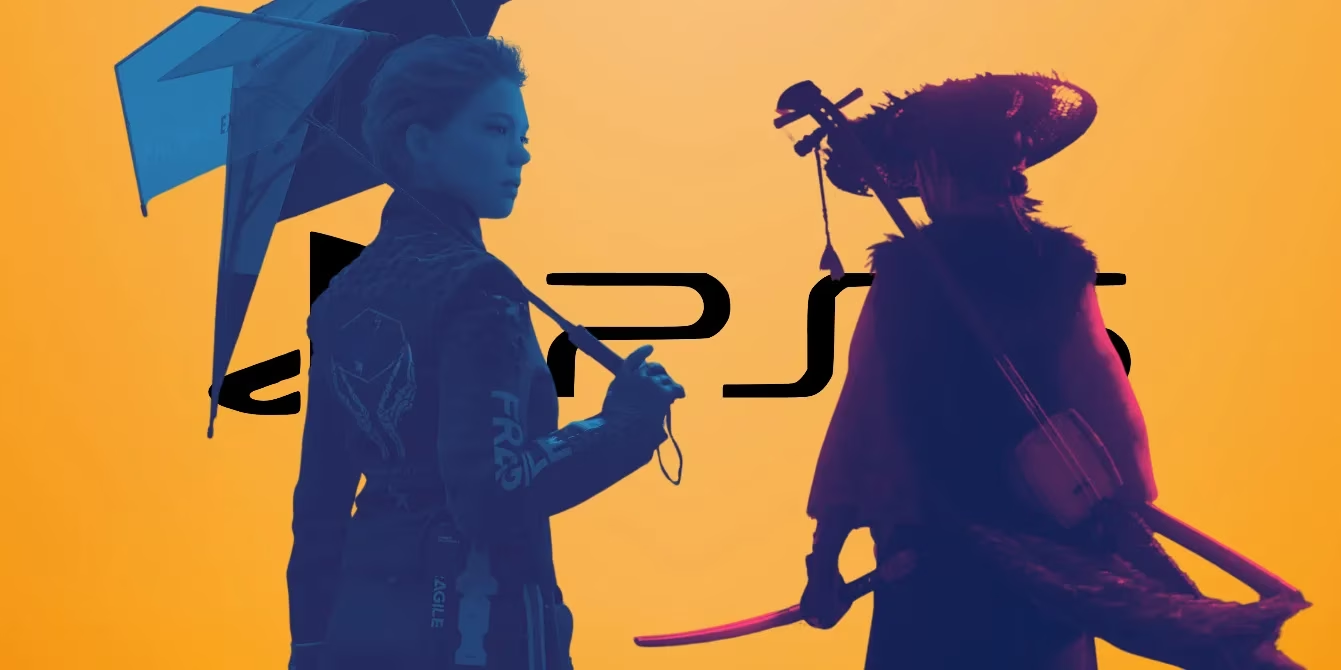
Let's be real for a second—no one expects a State of Play to be a barren wasteland. There will undoubtedly be a curated selection of intriguing indies, perhaps a port or two for the PS VR2 (likely giving some Meta Quest gems a second life), and maybe even a cute little update for everyone's favorite robotic platformer. But let's call a spade a spade: these are the supporting acts. The headliners, as far as the core PlayStation audience is concerned, appear to be the samurai epic from Sucker Punch and Kojima's latest mind-bending odyssey. The pressure isn't on the developers to over-deliver on a marketing showcase; the pressure is on Sony to prove its platform's identity remains intact.
Is PlayStation Still the King of Exclusives?
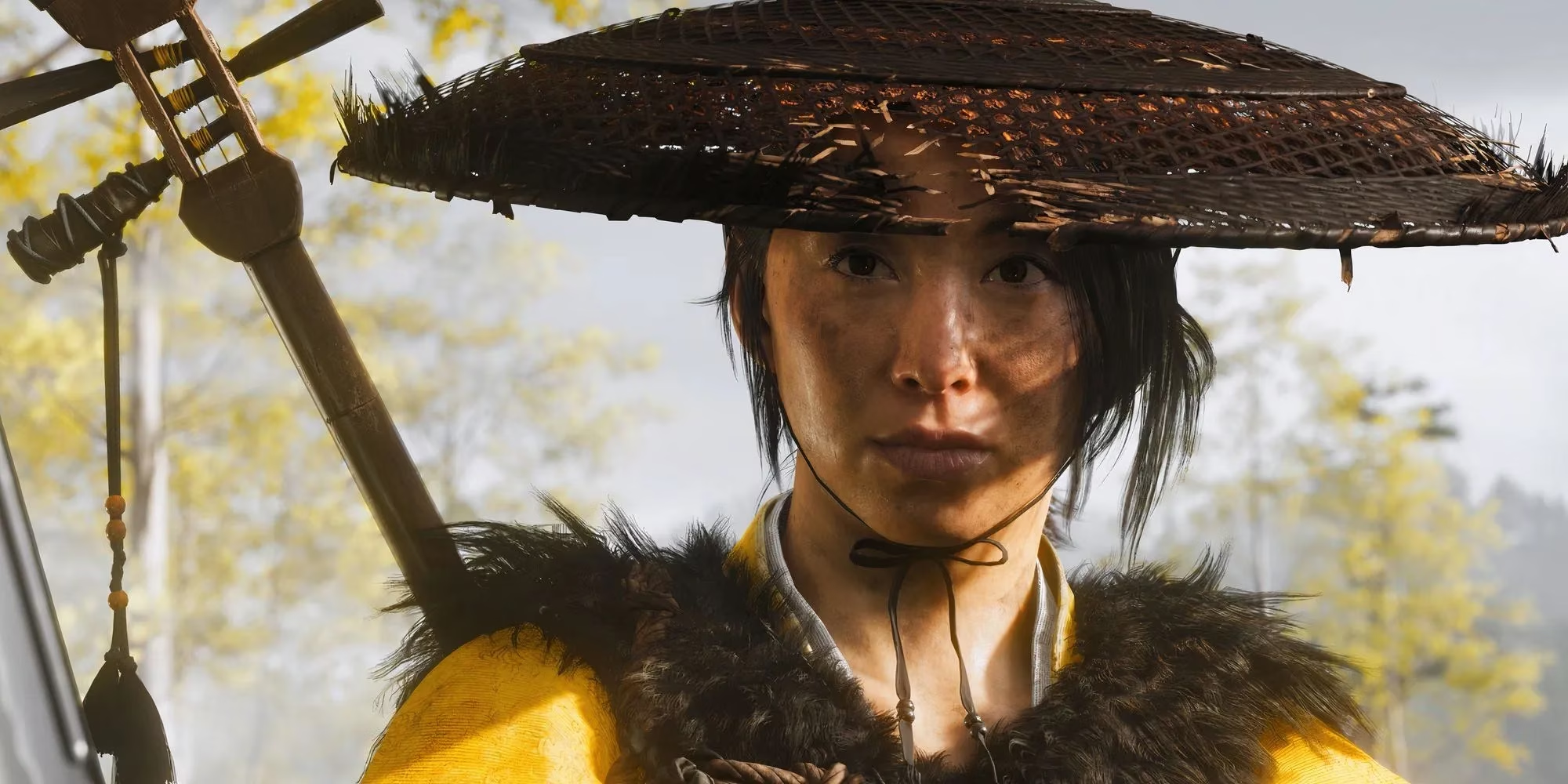
This isn't about being a Debbie Downer. It's about observing a shifting paradigm. For over a decade, Sony built its PlayStation brand into a powerhouse on the back of monumental, system-selling exclusive experiences. The "Only on PlayStation" tag was a badge of honor and a major driver of console loyalty. Fast forward to 2026, and the picture looks different. This year's alleged exclusive roster seems to boil down to one major first-party title (Ghost of Yotei) and one major, albeit second-party, third-party exclusive (Death Stranding 2).
Compare that to the competition's 2026 slate, and the contrast is stark. Xbox is coming out swinging with a formidable lineup that includes Avowed, South of Midnight, Clair Obscur: Expedition 33, the highly anticipated Doom: The Dark Ages, and The Outer Worlds 2—all bolstered by the ever-expanding Game Pass library, with potential heavy-hitters like Fable and Gears of War waiting in the wings. Oh, and let's not forget the small matter of Grand Theft Auto VI dominating the cultural conversation and the imminent launch of the Nintendo Switch 2. In this context, a two-horse race feels... lean.
Sony is at a strategic crossroads—a classic 'stick or twist' moment. The 'stick' strategy would involve doubling down on the traditional blockbuster model, potentially unveiling surprise projects from studios like Insomniac or Housemarque at this State of Play to reaffirm that the old magic is still there. The 'twist' would signal a more fundamental pivot: a focus on a more frequent cadence of smaller, high-quality experiences, perhaps coupled with a revitalized PS Plus offering, moving away from the 'all eggs in a few massive baskets' approach. The latter seems the likely long-term play, especially in the wake of Sony's scaled-back live-service ambitions, but for this specific event, the die is likely already cast.
The Ghost of Strategies Past: Sony's Evolving Blueprint
The immediate contents of this State of Play were likely locked in well before the industry heard about the cancellations of projects like the God of War and Horizon live-service games. The show hasn't lost a headline announcement because those MMO-lite visions are no more. However, those cancellations fundamentally alter the context of the showcase. They underscore a period of recalibration for PlayStation.
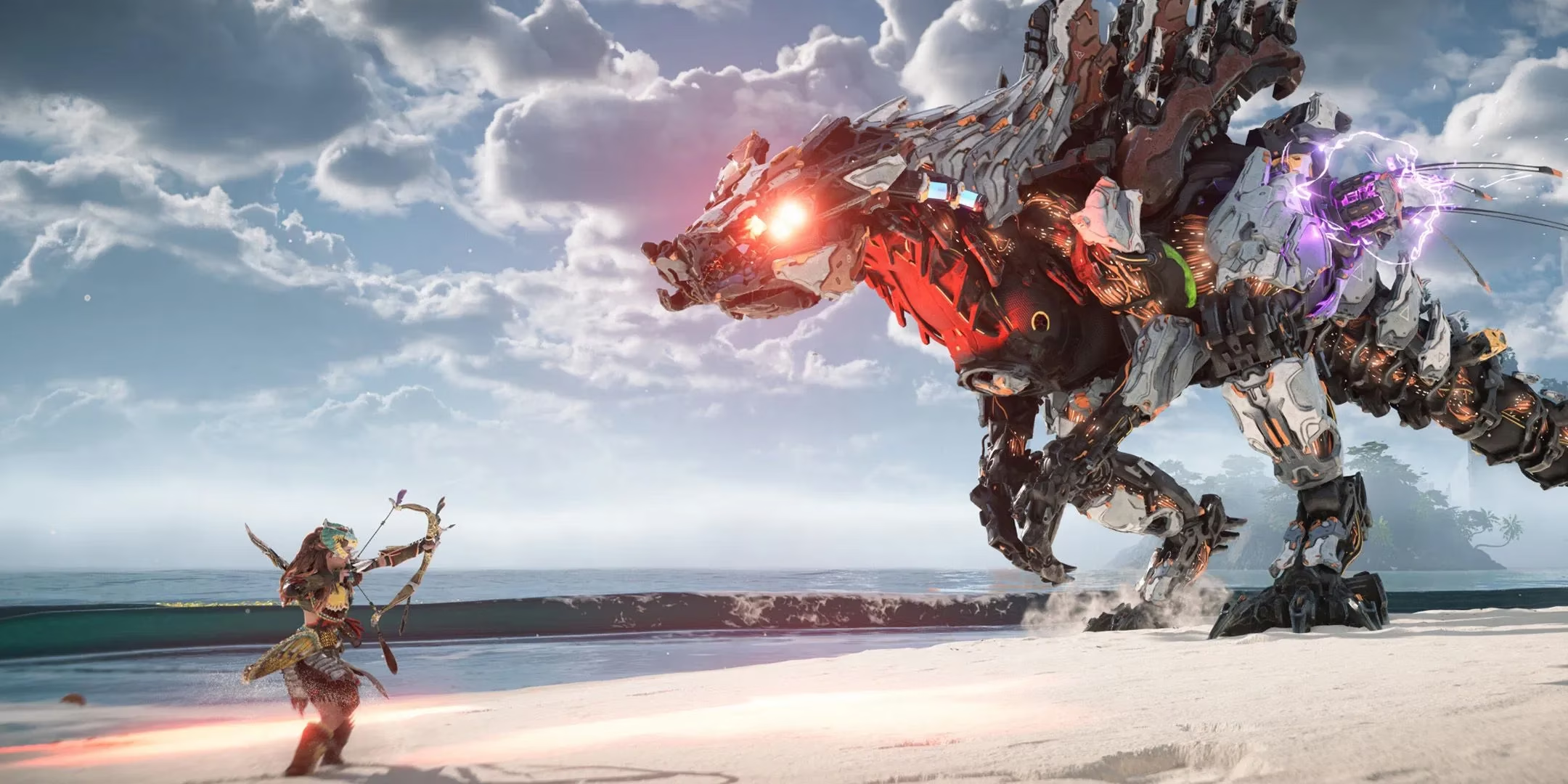
The PS5 generation, for all its technical prowess, has lacked the clear, defining momentum of the PS4 era. While it flew off shelves at launch, the library of true, generation-defining exclusives has been thinner, with many cross-gen titles making the leap from PS4 feel less pronounced. The entire console cycle is, frankly, searching for an identity. Xbox, despite its own missteps, has Game Pass as a consistent, ecosystem-defining pillar. PlayStation's answer has been less coherent, oscillating between prestige single-player narratives and a now-faltering live-service push.
Here's the kicker: Sony is still leading the console sales race. It has banked enough goodwill and market presence to tread water for a while. Ghost of Yotei looks phenomenal—a surefire hit—but is it a wave that lifts all boats, or just another excellent game in a portfolio? It feels more like maintaining a strong position than charging into a new one. The problem with treading water is that eventually, the current changes. Xbox's 2026 lineup suggests it might be building that current right now.
The 2026 Verdict: More Than Just a Showcase
This upcoming State of Play, therefore, is more than just a summer games preview. It's a litmus test. It's Sony's opportunity to strike back and recapture the narrative. The ideal scenario would involve:
-
Knockout presentations for Ghost of Yotei and Death Stranding 2: This is the baseline. They need to dazzle.
-
At least one 'Oh wow!' first-party surprise: A teaser for a new IP or the next project from a flagship studio (Naughty Dog, Santa Monica) to show there's more in the pipeline.
-
A compelling vision for PS Plus and smaller games: Showcasing how these elements create a vibrant, ongoing ecosystem, not just fill gaps between tentpoles.
| PlayStation's Challenge | Xbox's 2026 Counter | The Stakes |
|---|---|---|
| Defining the PS5's legacy | Game Pass + stacked exclusive slate | Market leadership & mindshare |
| Moving beyond 'treading water' | Capitalizing on perceived momentum | The narrative heading into the next hardware cycle |
| Clarifying its post live-service strategy | Consistent ecosystem offering (Game Pass) | Long-term player engagement & retention |
Ultimately, the gaming community will be watching closely. Will this State of Play be remembered as the moment PlayStation reasserted its dominance, or as a pleasant but ultimately insufficient display in a year where the competition brought its A-game? The ball is in Sony's court. The industry is holding its breath, waiting to see if PlayStation still has that killer instinct, or if 2026 will be the year the balance of power truly begins to shift. It's go time.