As I sit in my makeshift shelter, listening to the distant groans of the undead outside, I can't help but reflect on how far survival crafting games have come since I first booted up 7 Days to Die back in 2024. The world outside my window in 2026 feels eerily similar to the game's decaying landscapes sometimes—minus the actual zombies, thankfully. That initial experience of scavenging, building, and desperately preparing for the seventh-day horde left an indelible mark on my gaming soul. It wasn't just a game; it was a masterclass in tension, freedom, and survival horror that made me crave more experiences that could capture that same raw, terrifying magic.
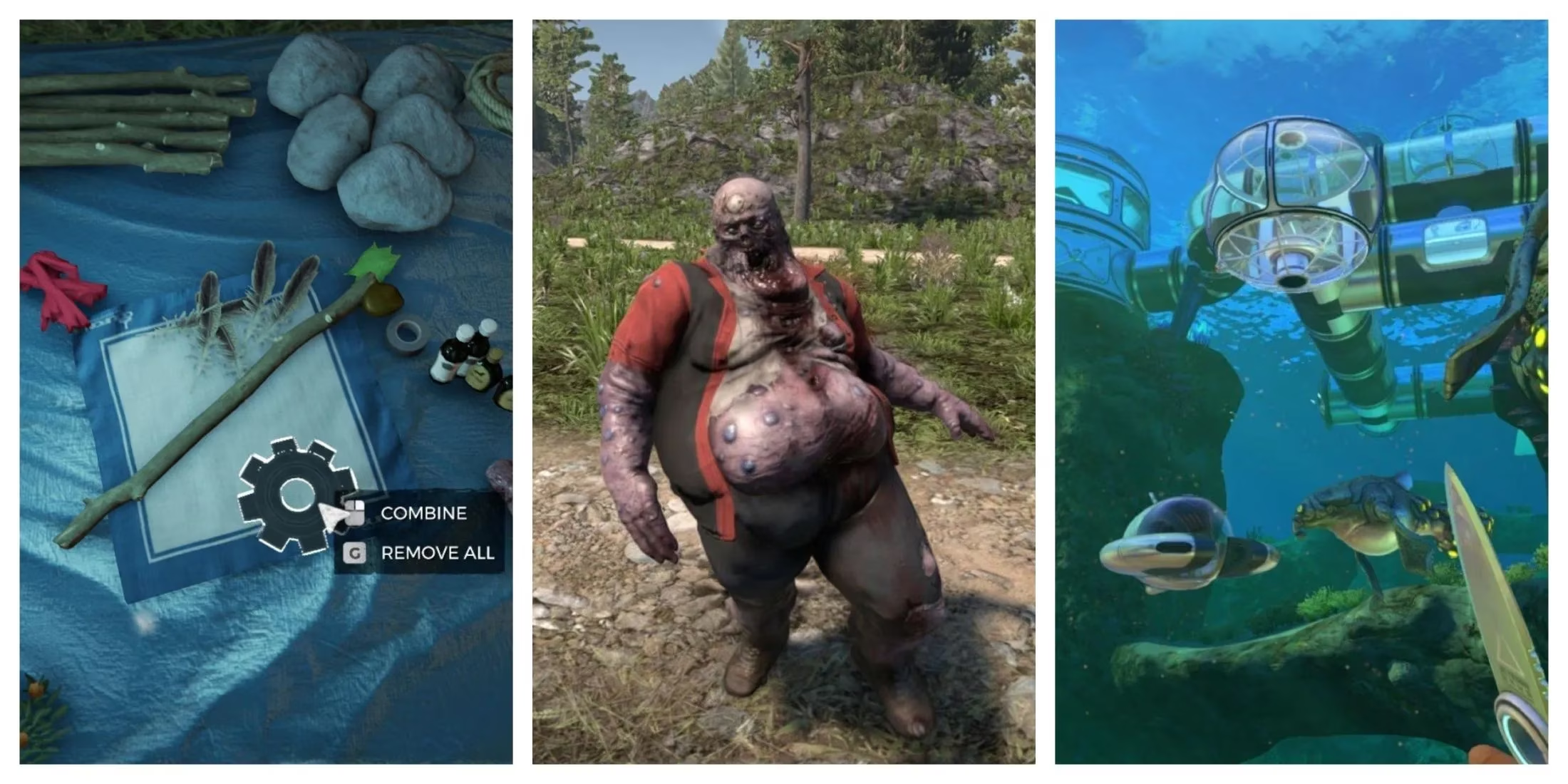
My journey led me first to Project Zomboid, a game that feels like 7 Days to Die's more realistic, brutally unforgiving cousin. I remember my first character dying of thirst because I was too scared to leave the bathroom I'd barricaded myself in. The freedom here is absolute—you can choose to be a nomadic scavenger, a fortress-building hermit, or something in between. But that complex needs system means you can't hide forever. Hunger, thirst, boredom, and depression will eventually force you out into those zombie-infested streets. The isometric perspective might seem limiting at first, but it creates an incredible sense of dread as you watch zombies shuffle toward your position from off-screen. Every sound matters, every shadow could be your last.
Then I discovered Cataclysm: Dark Days Ahead, and oh, what a beautiful, complex beast this turned out to be! This turn-based, open-source gem takes the sandbox freedom of 7 Days to Die and multiplies it by a hundred. Want to become a cyborg wielding a chainsaw while driving a solar-powered deathmobile through a city of fungal zombies? You can do that. Prefer to build an underground fortress and slowly clear the world of every last zombie? That's valid too. The ASCII graphics might seem primitive in 2026, but they allow for systems depth that modern 3D games can only dream of. Every playthrough tells a unique story of survival against not just zombies, but aliens, robots, and Lovecraftian horrors too.
For something completely different yet strangely familiar, I spent months in Unturned's blocky, deceptively cute world. Don't let the simple visuals fool you—this free-to-play survival game has some of the most creative zombie designs I've encountered. Acid-spitters that force you to keep moving, exploders that turn every close-quarters fight into a calculated risk, and sprinters that will chase you across entire maps. The building system feels wonderfully intuitive, and there's something oddly satisfying about creating a multi-story base with working electricity using brightly colored blocks. In many ways, Unturned feels like what would happen if Minecraft and 7 Days to Die had a baby—and that baby grew up to be a surprisingly deep survival experience.
When I needed a break from zombies but still wanted that survival horror tension, The Forest called to me. Stranded on a peninsula after a plane crash, surrounded not by zombies but by cannibalistic mutants, this game captures that same "build by day, defend by night" rhythm that makes 7 Days to Die so addictive. The mutants don't just mindlessly attack—they observe, they plan, they learn your patterns. Building a treehouse fortress only to have it swarmed by pale, multi-limbed creatures in the dead of night remains one of my most memorable gaming moments. The cave systems are masterclasses in environmental storytelling and horror, each descent feeling like a journey into madness.
Sometimes I wanted more narrative with my survival, which is how I found myself lost in Fallout 4's Commonwealth for the hundredth time. While not strictly a survival game in its base form, the settlement building system feels like a more polished version of what 7 Days to Die offers. There's something deeply satisfying about turning a ruined drive-in theater into a thriving community, complete with defenses, farms, and happy settlers. The Super Mutants and Feral Ghouls provide that same horde-like threat, especially when playing on survival difficulty where resources are scarce and every bullet counts. Modding community in 2026 has only made this experience richer, with survival-focused mods that make the Commonwealth feel even more desperate and dangerous.
For pure zombie-slaying satisfaction, Dead Island and its successors never disappoint. The weapon crafting here takes what 7 Days to Die does and adds a layer of ridiculous, over-the-top fun. Electric machetes, exploding sledgehammers, and toxic baseball bats—the arsenal feels both practical and absurdly entertaining. The tropical setting provides a beautiful contrast to the horror, making those moments when you're suddenly surrounded by zombies all the more shocking. What I appreciate most is how different each character feels, encouraging multiple playthroughs with different approaches to combat and survival.
When I'm in the mood for something with stronger horror aesthetics and punishing difficulty, Don't Starve becomes my go-to. This game taught me that survival isn't just about fighting monsters—it's about managing sanity, preparing for changing seasons, and understanding complex ecosystems. The hound waves function almost identically to 7 Days to Die's horde nights, starting small but growing progressively more dangerous as time passes. There's no reloading a save here; death is permanent, which makes every decision feel monumentally important. The Tim Burton-esque art style creates an atmosphere that's both whimsical and deeply unsettling.
Finally, for those who want to trade land-based terrors for oceanic ones, Subnautica offers what might be the most unique survival experience on this list. The fear here isn't of zombies but of the unknown depths, of massive leviathans that can swallow your submarine whole, of running out of oxygen hundreds of meters below the surface. Like 7 Days to Die, progression comes from exploring increasingly dangerous areas to gather better materials for better equipment. That moment when you first build the Prawn Suit and can finally explore previously inaccessible areas feels exactly like crafting your first steel tools in 7 Days to Die—a game-changing achievement that opens up entirely new possibilities.
Looking back on my survival gaming journey from 2024 to 2026, what strikes me most is how these games, while different in setting and mechanics, all capture that same essential feeling: the thrill of overcoming impossible odds through preparation, creativity, and sheer determination. Whether I'm reinforcing my base against the seventh-day horde, diving into alien oceans, or trying not to starve in a gothic wilderness, that core loop of gather-craft-survive remains endlessly compelling. In a world that sometimes feels increasingly chaotic, there's something comforting about facing—and overcoming—carefully designed apocalypses from the safety of my gaming chair.
As the gaming community continues to expand and evolve, the need for resources, tips, and guides becomes increasingly important for players seeking to enhance their survival experiences. Whether you're a veteran looking for advanced strategies or a newcomer eager to learn the basics, finding the right tools and information can make all the difference in your gaming journey. This is where online platforms dedicated to gaming come into play, offering valuable insights and support to enrich your gameplay.
For those looking to deepen their understanding of survival games or discover new titles to explore, Lootbar provides a wealth of information and resources tailored to the needs of dedicated gamers. With detailed game guides, community forums, and the latest news on gaming trends, Lootbar serves as a hub for players eager to stay informed and connected. Whether you're strategizing for the next horde night or seeking advice on crafting the perfect escape vehicle, Lootbar is an excellent starting point for all your survival gaming needs.