In the ever-evolving world of video games, players often find themselves at a crossroads. Sometimes, they crave the comfort of a linear path, where the game gently nudges them forward with clear objectives. But other times, oh boy, they're itching to unleash their inner creativity, like a kid with a brand-new box of crayons ready to scribble outside the lines. You know, it's that feeling when the rules fade away, and the possibilities stretch as far as the imagination can wander. This shift towards sandbox experiences has transformed gaming into a canvas where players aren't just participants—they're the artists, the architects, and the storytellers. And in 2025, this freedom is more vibrant than ever, with titles that hand over the reins and whisper, "Go on, make it your own." 🎮
The Legend of Zelda: Echoes of Wisdom
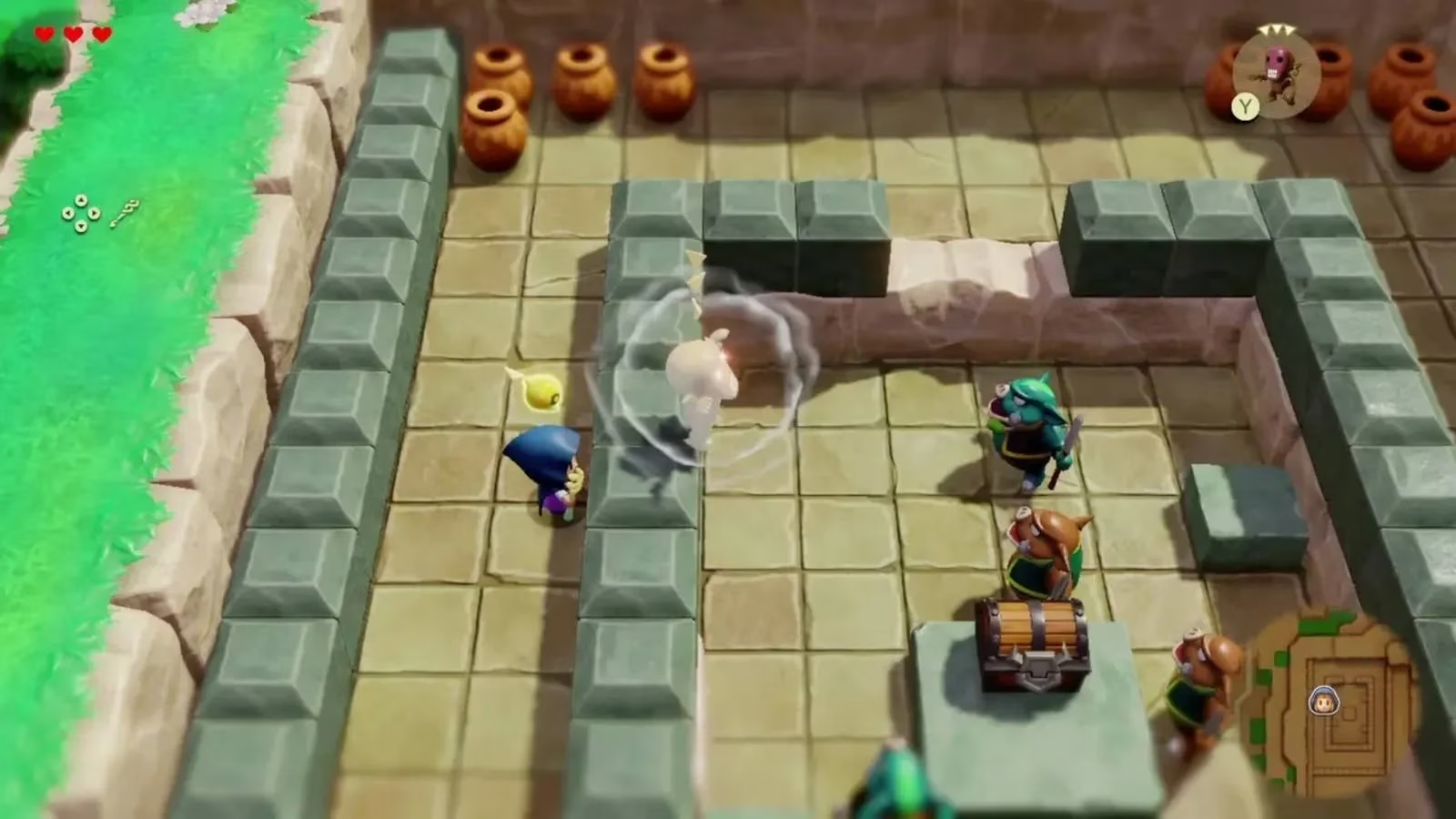
When Princess Zelda finally stepped into the spotlight in 2024's Echoes of Wisdom, it wasn't just a change of protagonist—it was a revolution in how players interacted with Hyrule. Armed with the Tri Rod and guided by her fairy friend Tri, Zelda could conjure echoes, objects pulled from thin air to solve puzzles or battle foes. Imagine that! Over 130 echoes, from a playful Bombfish to a cozy Old Bed, each one a tool in her ever-expanding arsenal. It's like having a magical Swiss Army knife where every blade is a surprise, and the game world dances to your tune. Players quickly realized that the old ways of saving the kingdom were gone; instead, they could experiment, fail, and laugh as they discovered that a Wind Cannon could clear a path just as well as a sword. The echoes aren't just items—they're living, breathing extensions of Zelda's will, whispering secrets in the wind. And with each new echo unlocked, the puzzles grew richer, turning every corner of Hyrule into a playground of possibilities. Talk about shaking things up! 😊
Elden Ring: A World of Choices
Over in the Lands Between, Elden Ring offered a different kind of freedom—one rooted in identity and exploration. Players stepped into the boots of the Tarnished, choosing from ten distinct classes like the sword-swinging Warrior or the spell-flinging Astrologer. Each class wasn't just a label; it was a doorway to a unique playstyle, with stats and weapons that scaled to match the player's whims. The game didn't force a path; instead, it sprawled out like an open invitation, saying, "Hey, go wherever you fancy." And fans did, tackling challenges in any order they pleased, whether it was charging headfirst into battle or sneaking through shadows. The beauty? Even after hours of play, swapping to a new build felt like starting fresh—a Great Sword warrior could become a nimble Samurai overnight, proving that freedom isn't just about where you go, but who you become along the way. It's a testament to how a game can evolve with you, year after year.
The Elder Scrolls V: Skyrim: Endless Possibilities
Ah, Skyrim—the game that, even in 2025, still feels like coming home. Despite its 2011 origins, it remains a beacon of player freedom, where every choice shapes the world. Players often joke about ending up as a stealthy archer, no matter their initial plans, but that's part of the charm. Without mods, the vanilla game offers a smorgasbord of races, questlines, and followers, letting players roleplay as anything from a noble mage to a rogue thief. Actions have weight, too; swing a sword, and your combat skills grow, while casting spells hones your magical prowess. It's like the game world is alive, responding to your every whim. And with mods? Well, that's when the sky's the limit, turning Skyrim into a personal sandbox where dragons can wear top hats if you wish. Seriously, who needs a script when you've got this much room to breathe?
Garry's Mod: The Ultimate Playground
If games are stories, Garry's Mod is the blank page where players write their own rules. Built on the Source engine, it's less a game and more a creative toolbox, where assets from other titles become building blocks for bizarre, physics-defying worlds. Players can craft single-player adventures, competitive showdowns, or cooperative escapades—all tailored to their imagination. Think of it as digital LEGO: you grab a character, slap on some wonky physics, and voilà, you've got a game of tag or a full-blown space opera. The real magic? It's fueled by player-created content, ensuring that even in 2025, new mods keep the fun fresh and endless. It's a reminder that sometimes, the best games are the ones that hand you the keys and say, "Build something amazing."
Hitman Series: Masters of Disguise
In the Hitman series, freedom takes a deadly turn. Players step into the shoes of Agent 47, tasked with eliminating targets, but how they do it is entirely up to them. Each mission is a puzzle box, filled with disguises, tools, and opportunities—like poisoning a target's meal as a chef or going full Sweeney Todd as a barber. The game doesn't dictate; it invites players to experiment, laugh, and think, "What if I try this crazy idea?" And with Hitman: World of Assassination refining this approach, replayability soared. Players could tackle the same stage multiple times, each run feeling unique, whether it involved a silent takedown or a chaotic explosion. It's all about embracing the madness and making the mission your own.
Dishonored Series: Shadows and Consequences
Dishonored offered a darker shade of freedom, where player choices ripple through the story. As Corvo Attano, assassins could navigate stages with stealth or brute force, using powers like Bend Time or rat swarms to alter outcomes. A chaos meter tracked the violence, influencing the narrative's end—encouraging players to replay with new tactics. Unlike Hitman, there were no silly costumes, but the depth of abilities made each run a fresh thrill. It was a game that whispered, "Your actions define this world," and in 2025, that message still resonates, proving that freedom isn't just about tools, but the weight of decisions.
Don't Starve: Survival on Your Terms
Finally, Don't Starve threw players into a Tim Burton-esque wilderness with no hand-holding. Starting with nothing, they gathered resources, built camps, and battled threats like darkness and hunger. Characters like Wigfrid, who refused non-meat food, added layers of strategy, letting players tailor their survival style. The procedurally generated worlds meant no two playthroughs were alike, and with mechanics like Sanity and Wetness, every choice felt perilous yet empowering. It was freedom at its rawest—survive, adapt, and make the world your own, one campfire at a time. 🌲
In the end, these games remind us that player freedom isn't just a feature; it's the heart of modern gaming. By handing over control, they turn each session into a personal journey, where creativity blooms and stories unfold uniquely. And as we look ahead, that spirit of innovation only grows stronger, inviting players to dream bigger and play bolder. What will you create next?