As someone who's spent countless hours traversing the haunting landscapes of Hideo Kojima's world, I can't help but feel a mix of excitement and apprehension about Death Stranding 2: On the Beach. The original game wasn't just a title; it was an experience that redefined what a video game could be. Its strangeness was its strength, and that's exactly what the sequel needs to capture. Now, as we look toward its release, one moment from the first game stands out as both brilliant and controversial: the tar belt puzzle. It's a sequence that perfectly encapsulates Kojima's design philosophy—challenging, unconventional, and deeply thematic.
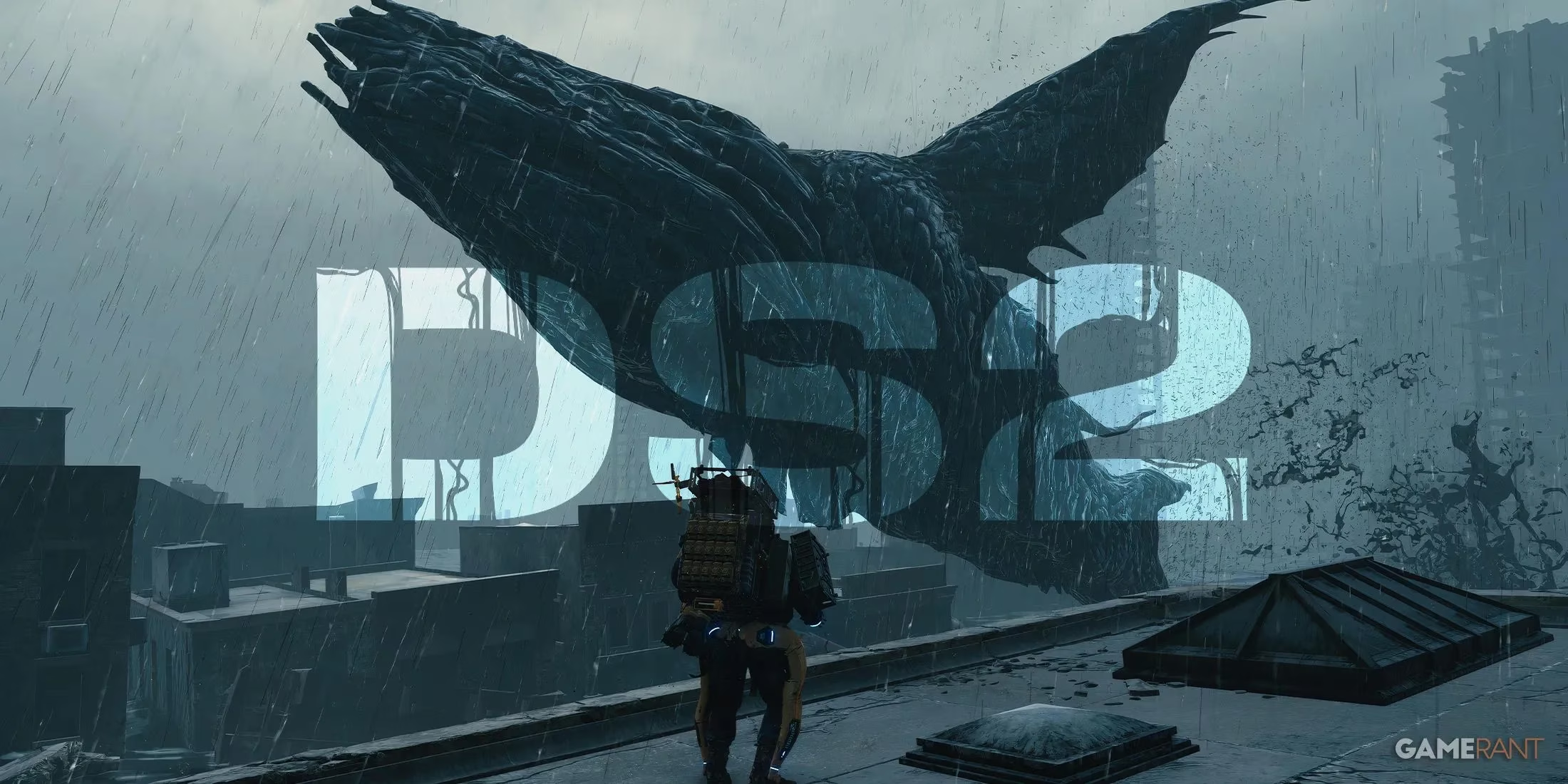
Let's talk about that moment, shall we? You're there, as Sam Bridges, facing this seemingly impassable sea of black tar, ruins jutting out like broken teeth. The game gives you no clear objective marker, no NPC shouting hints. It's just you and this impossible obstacle. I remember the frustration, the wandering, the trying every item in my inventory. Then came the revelation—the only way forward was to die. To willingly walk into the tar and drown. In a medium that typically punishes death with game over screens, this was a shocking subversion. It wasn't just a puzzle; it was a statement.
The genius of the tar belt puzzle lies in how it connects gameplay to theme. Death Stranding is, at its core, about connection, life, death, and rebirth. By making death the solution, Kojima forced players to engage directly with these concepts. It wasn't an abstract story beat; it was something you had to do. This moment also served as our first real, interactive connection to the Beach—that liminal space between life and death that had previously been just cutscene territory. Suddenly, it became a tangible part of the journey.
Here's why I believe Death Stranding 2 absolutely needs its own version of this mechanic:
-
Thematic Consistency: The subtitle "On the Beach" isn't just a cool name. It screams a deeper exploration of the afterlife realm introduced in the first game. A puzzle or mechanic centered around intentional death would be the perfect gameplay expression of this focus.
-
Evolution of Ideas: The first game used the concept once. That felt almost like a proof of concept—a brilliant one, but underutilized. A sequel provides the opportunity to expand, refine, and integrate this idea more fully into the game's systems.
-
Player Expectation & Subversion: Players going into the sequel will remember the tar belt. They'll be expecting tricks. Kojima's strength is in subverting those expectations in new, mind-bending ways.
Of course, there's a danger here. Repeating the exact same "walk into tar to die" puzzle would feel cheap. It would rob the original of its unique impact. The beauty of the first game's puzzle was its singularity and surprise. So, how could Death Stranding 2 do it differently?
Imagine if accessing the Beach became a regular, necessary part of gameplay. Not just for story moments, but for logistics. Maybe you need to retrieve lost cargo from the Beach, or communicate with beings that exist only there. The method of crossing over couldn't be simple—it should always carry weight, a literal sacrifice. Perhaps different situations require different methods of "crossing over." This would prevent the mechanic from becoming stale while preserving its thematic power.
Ultimately, the tar belt puzzle represents what makes Kojima's work special. It's a moment where game design, narrative, and theme fuse into one unforgettable experience. For Death Stranding 2 to truly build on its predecessor's legacy, it needs to find its own version of that alchemy. It needs a moment that makes us stop, think, and question the very rules of the game we're playing. A moment where the solution feels wrong until you realize it's the only thing that's ever been right. The Beach is waiting, and I, for one, am ready to dive back in.